What Is Loan-to-Value (LTV)? 2026 CRE Ranges
LTV is the loan divided by appraised value. See how lenders size retail loans and where 2026 LTVs actually land.
Definition
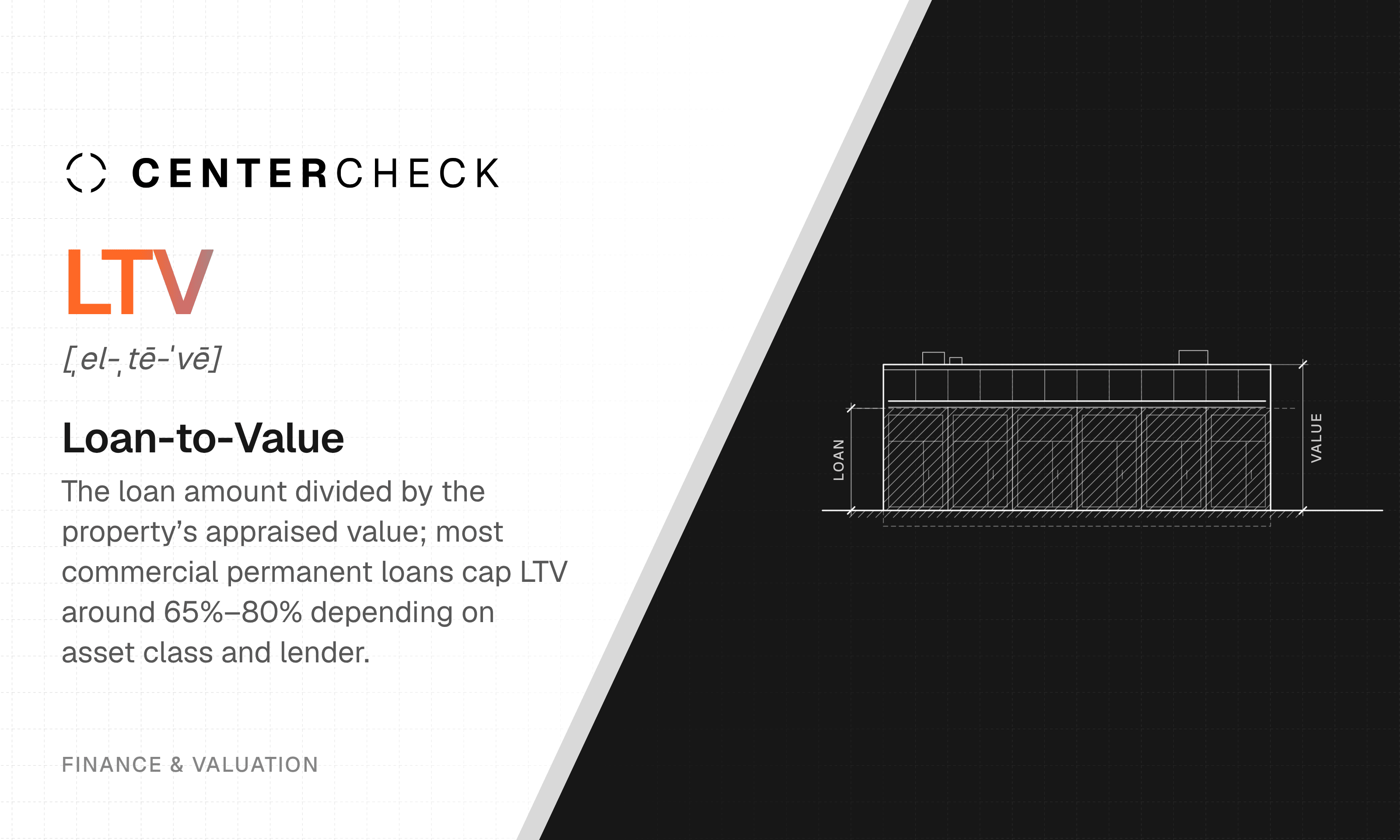
Loan-to-value is the loan amount divided by the property’s appraised value. It measures how much of a property is financed with debt and how much equity cushions the lender if values fall. Most commercial permanent loans cap LTV at 65% to 80% depending on asset class and lender; 80% is mostly agency multifamily.
Formula
LTV = loan amount ÷ appraised value.
Example
The center appraises at $20,500,000 with NOI of $1,620,000. The lender allows 65% LTV, 1.30x DSCR and a 10% debt yield. LTV caps the loan at $13,325,000. DSCR would allow $16,865,946 and debt yield $16,200,000. The lender offers the lowest. Equity is $7,175,000 plus costs.
In practice
Lenders set proceeds and price by LTV tier. Borrowers compare quotes and plan equity. CMBS investors read it as loss severity.
Watch for
Caps are not averages: CBRE’s Q2 2026 lending data put commercial LTV at 59.6%. Values move while loans do not, so 65% at origination can exceed 80% after a downturn. The value rests on an appraisal, and the appraisal rests on income. Retail data for CRE lenders, including CenterCheck’s store level sales estimates, tests whether the tenants behind that value can keep paying.
Related terms
LTC · DSCR · Debt Yield · Debt Service

Follow Us