Cap Rate Compression vs Expansion, Explained
Compression raises values; expansion lowers them. See the math on a leveraged shopping center and 2026 retail trends.
Definition
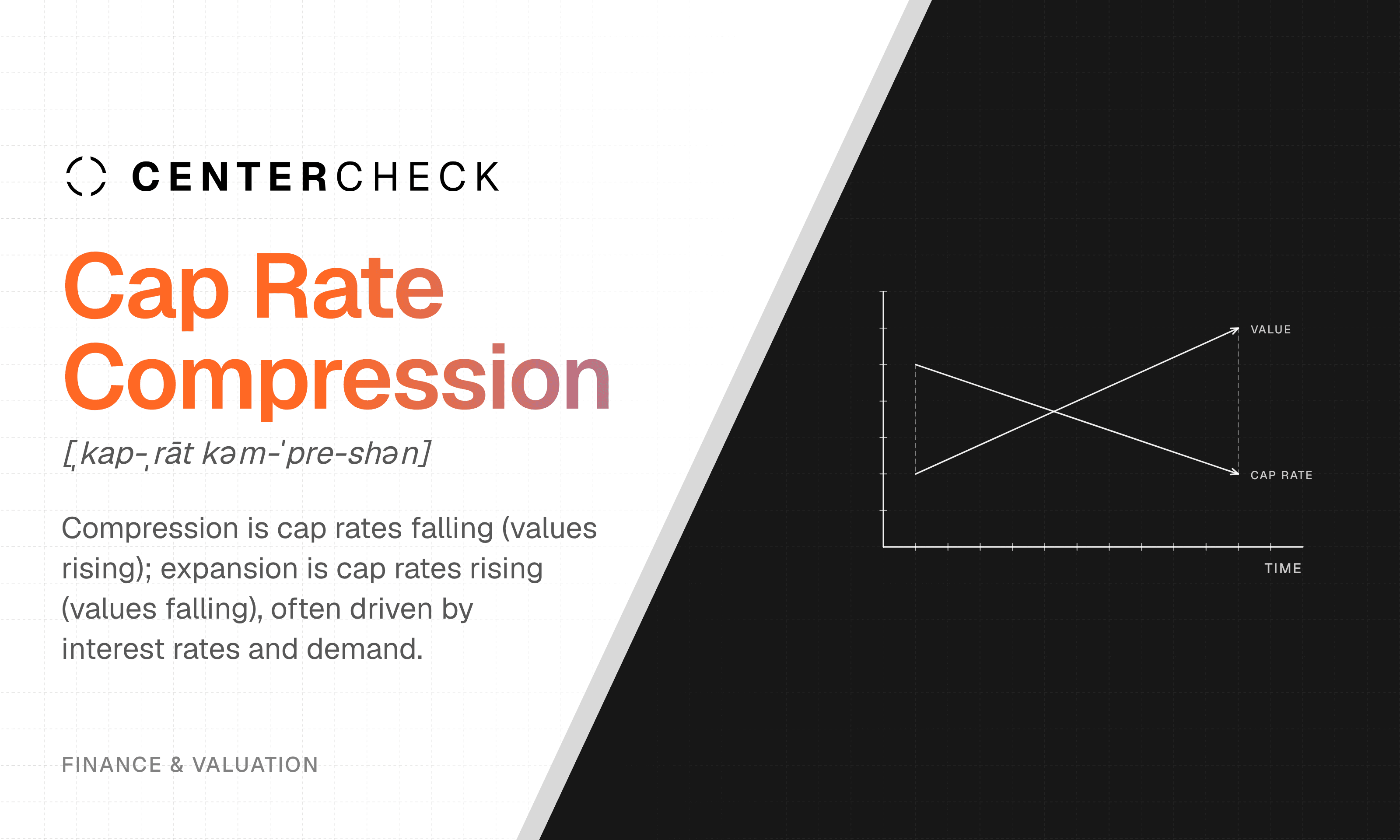
Cap rate compression is a fall in market cap rates, which raises values because buyers pay more per dollar of NOI. Expansion is the reverse: rising cap rates lower values even when income holds. Interest rates, the supply of capital and investors’ view of risk drive both.
Formula
Change in value = (old cap rate ÷ new cap rate) − 1.
Example
The center earns $1,620,000 of NOI, bought at 7.90% for $20,500,000 with $7,175,000 of equity. Compress 50 basis points to 7.40% and the value rises to $21,891,892, up 6.8%; equity gains 19.4%. Expand to 8.40% and the value falls to $19,285,714, down 5.9%; equity loses 16.9%. No change in income, a 17% to 19% swing in equity.
In practice
Investors buy after expansion and sell after compression. Fund managers separate returns earned from NOI growth from returns handed out by the market. Lenders stress collateral for expansion.
Watch for
Underwriting compression into the base case. Assuming rates and cap rates move one for one: retail has moved about 78 basis points per 100 in the Treasury, industrial 41 (CBRE Econometric Advisors). Averages hide the gap between formats. Grocery-anchored centers compressed about 40 basis points from the 2023 peak to 6.7% (JLL) while CBRE’s H1 2026 survey found the all-property average flat. Shopping center analytics on a retail real estate data platform such as CenterCheck separate a center’s own performance from market repricing.
Related terms
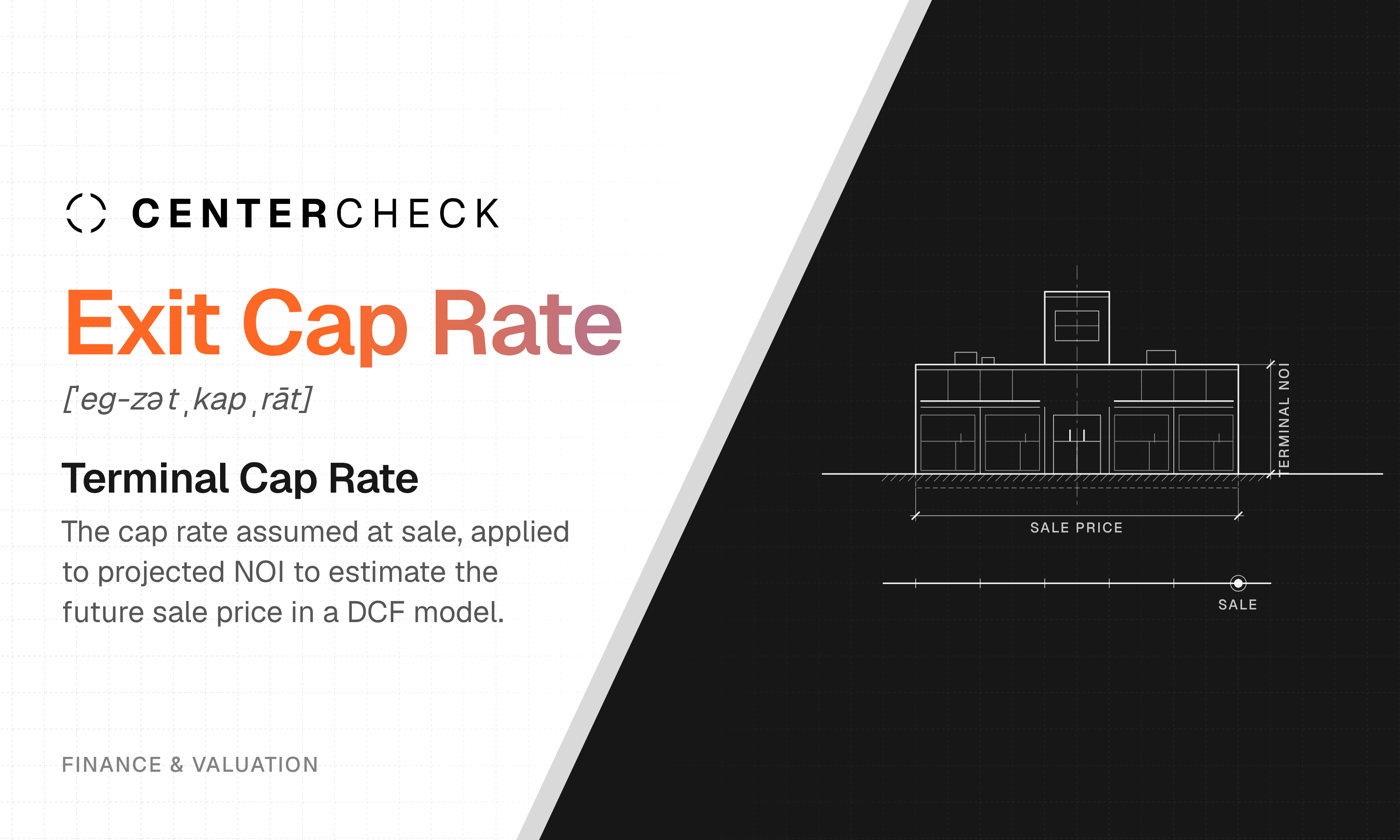
Cap Rate · Exit Cap Rate · Discount Rate

Follow Us