What Is a Going-In Cap Rate? Formula and Example
Going-in cap rate is year one NOI over purchase price. See how marketed, in-place and all-in cap rates differ on one deal.
Definition
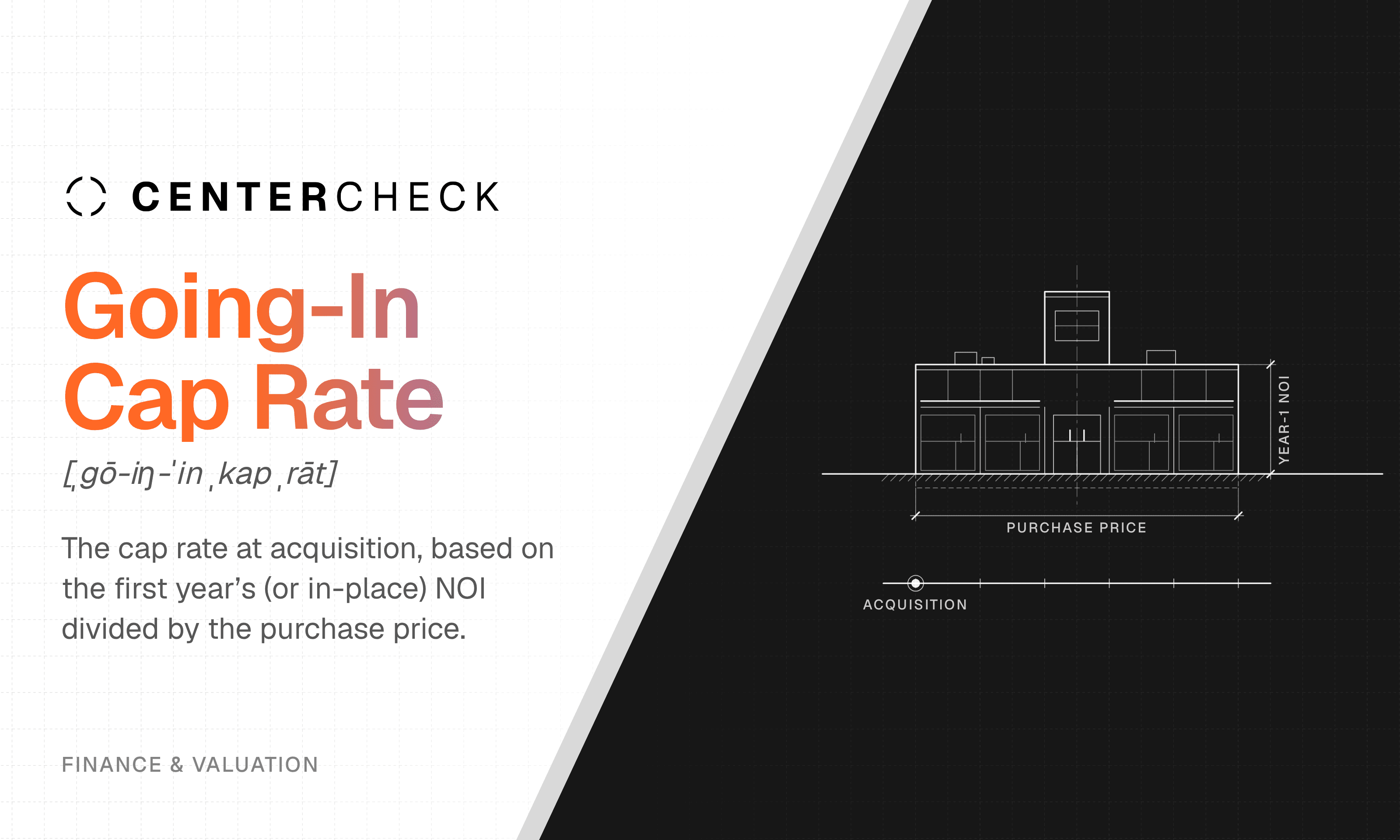
The going-in cap rate is the capitalization rate at acquisition: first-year or in-place net operating income divided by the purchase price. It is the buyer’s starting unlevered yield and the benchmark for the exit assumption.
Formula
Going-in cap rate = year one (or in-place) NOI ÷ purchase price.
Example
The center is marketed at $22,500,000 “at an 8.6% cap rate” on $1,930,000 of pro forma NOI. On in-place NOI of $1,620,000 the asking price is a 7.20% cap. At the buyer’s $20,500,000 offer, forward year-one NOI gives 7.90%; trailing-twelve NOI of $1,585,000 gives 7.73%; adding $400,000 of closing costs gives 7.75% all-in. The 7.90% yield exceeds the 7.39% loan constant, so leverage is positive, and it sits near the 7.3% multi-tenant retail average in Marcus & Millichap’s May 2026 outlook.
In practice
Buyers defend offers with it. Committees compare it with the cost of debt and the required return. Lenders check it against the loan constant.
Watch for
Different NOI bases produce different numbers; state which. A marketed cap rate is an argument, not a fact. Year-one rollover changes NOI fast. The yield holds only if in-place rents are sustainable, which retail leasing analytics and CenterCheck’s store level sales estimates confirm during shopping center acquisition due diligence.
Related terms
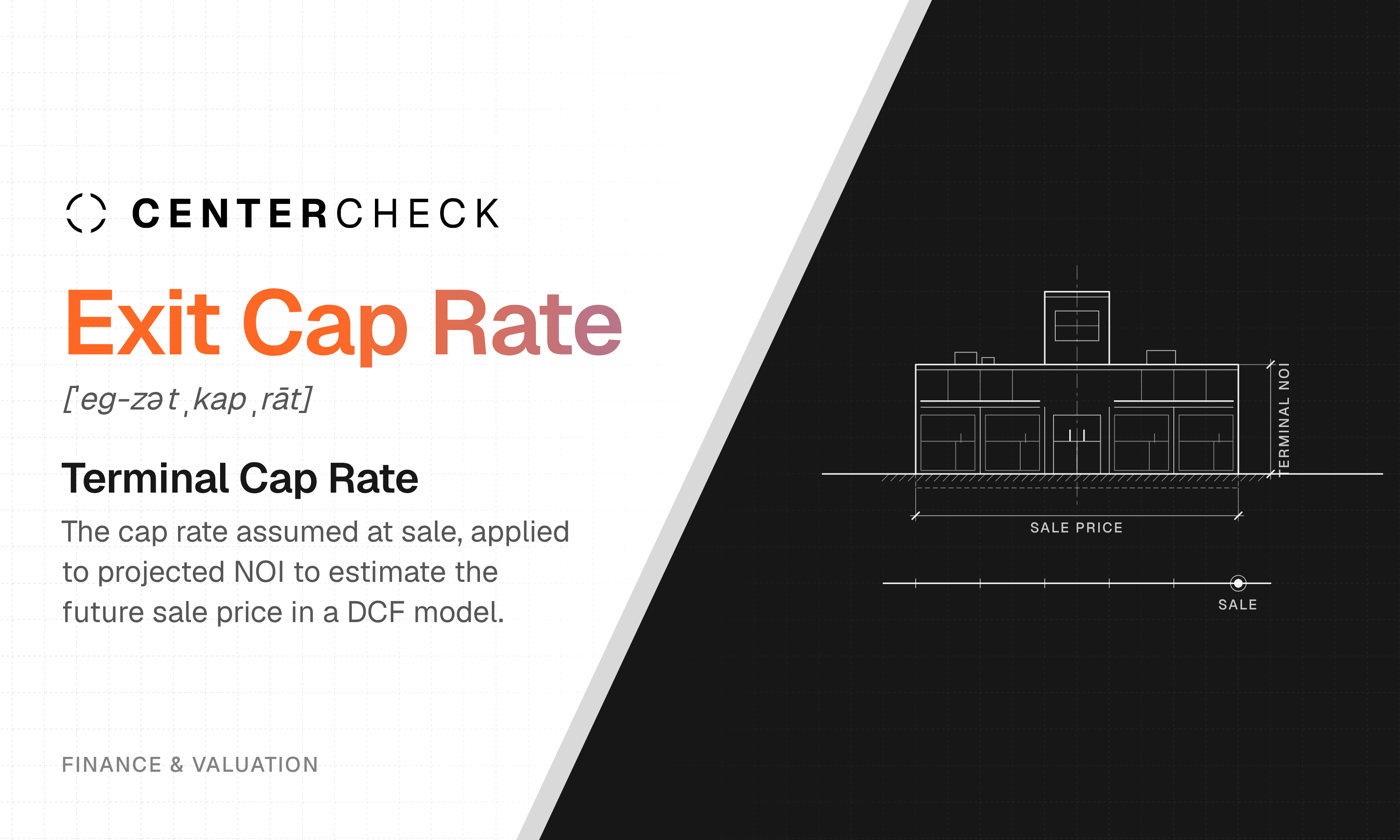
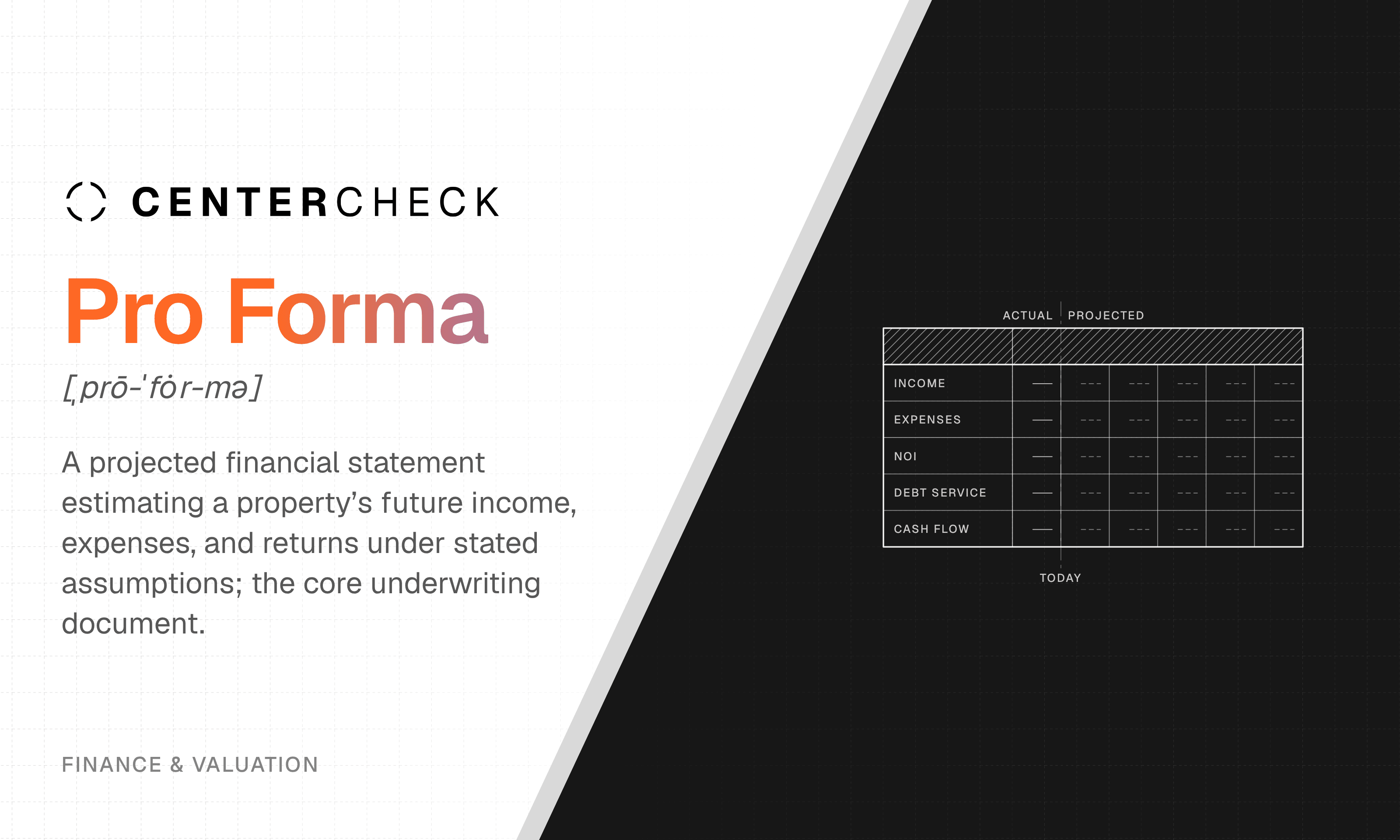
Cap Rate · Exit Cap Rate · NOI · Pro Forma

Follow Us