What Is a Value-Add Strategy in Real Estate?
Value-add buys under-performing property and raises NOI. See a shopping center example with yield on cost and target returns.
Definition
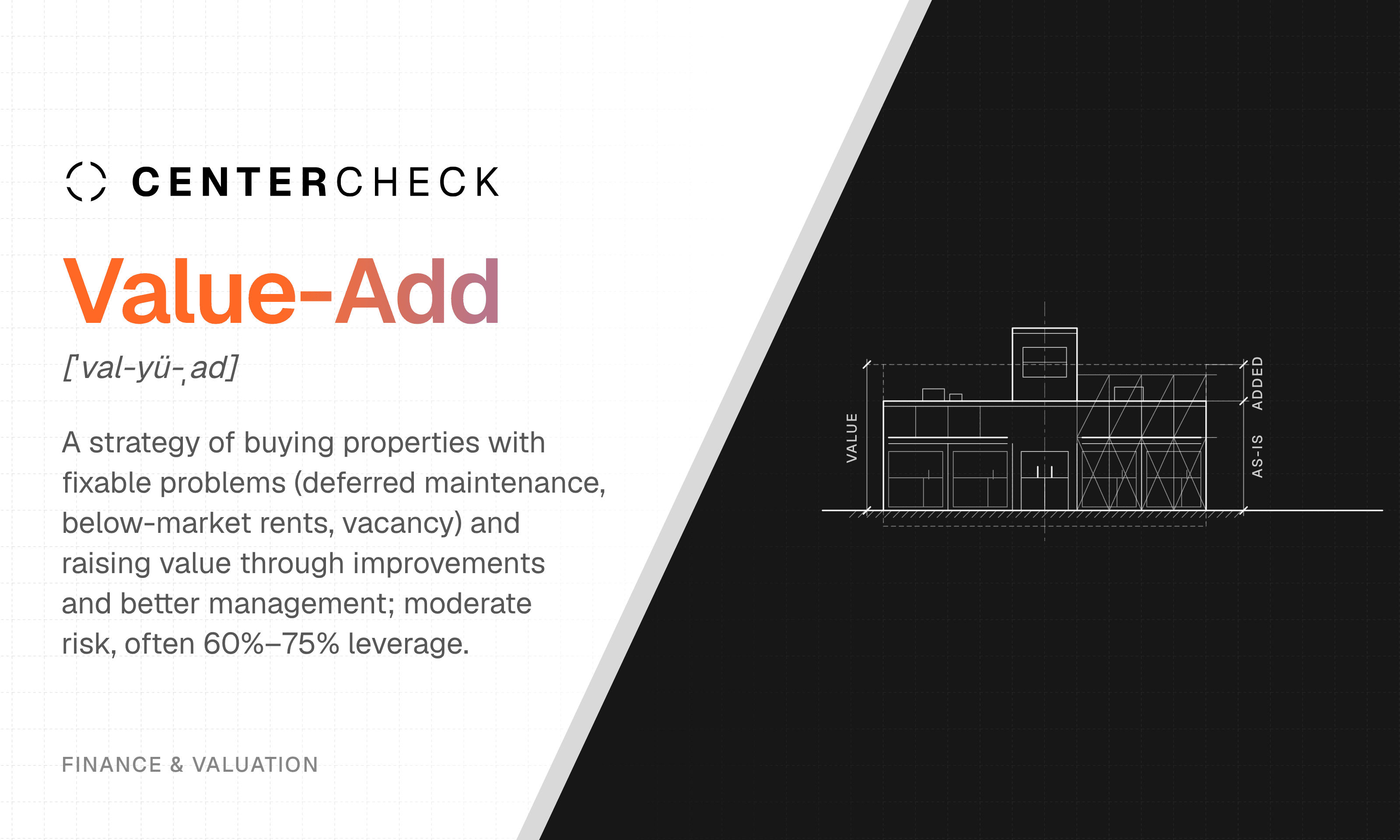
A value-add strategy buys properties with fixable problems, such as deferred maintenance, below-market rents or vacancy, and raises their value through capital improvements, re-leasing and better management. It carries moderate risk and typically runs 60% to 75% leverage on cost.
Formula
Yield on cost = stabilized NOI ÷ (price + capital + closing costs). Value created = stabilized NOI ÷ market cap rate − total cost.
Example
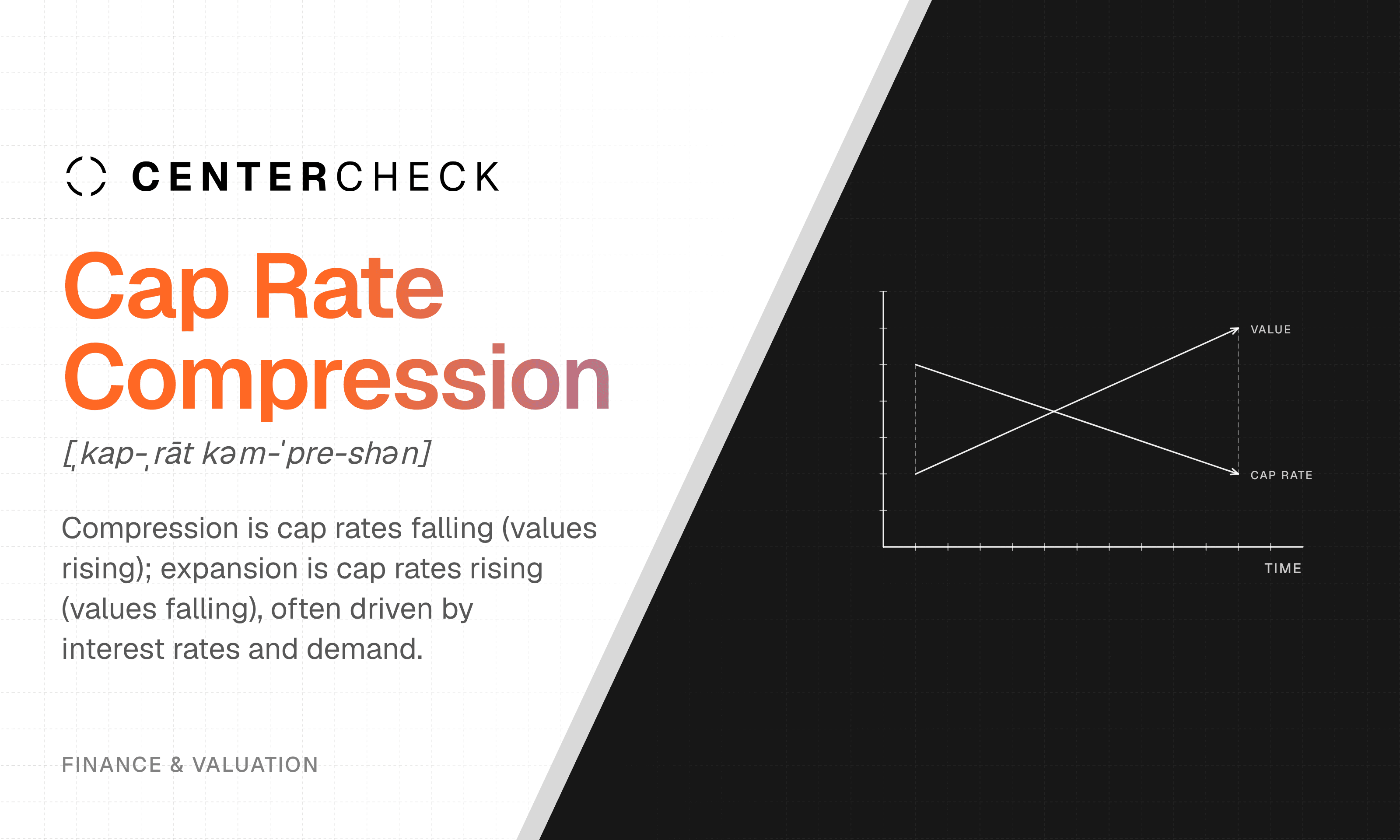
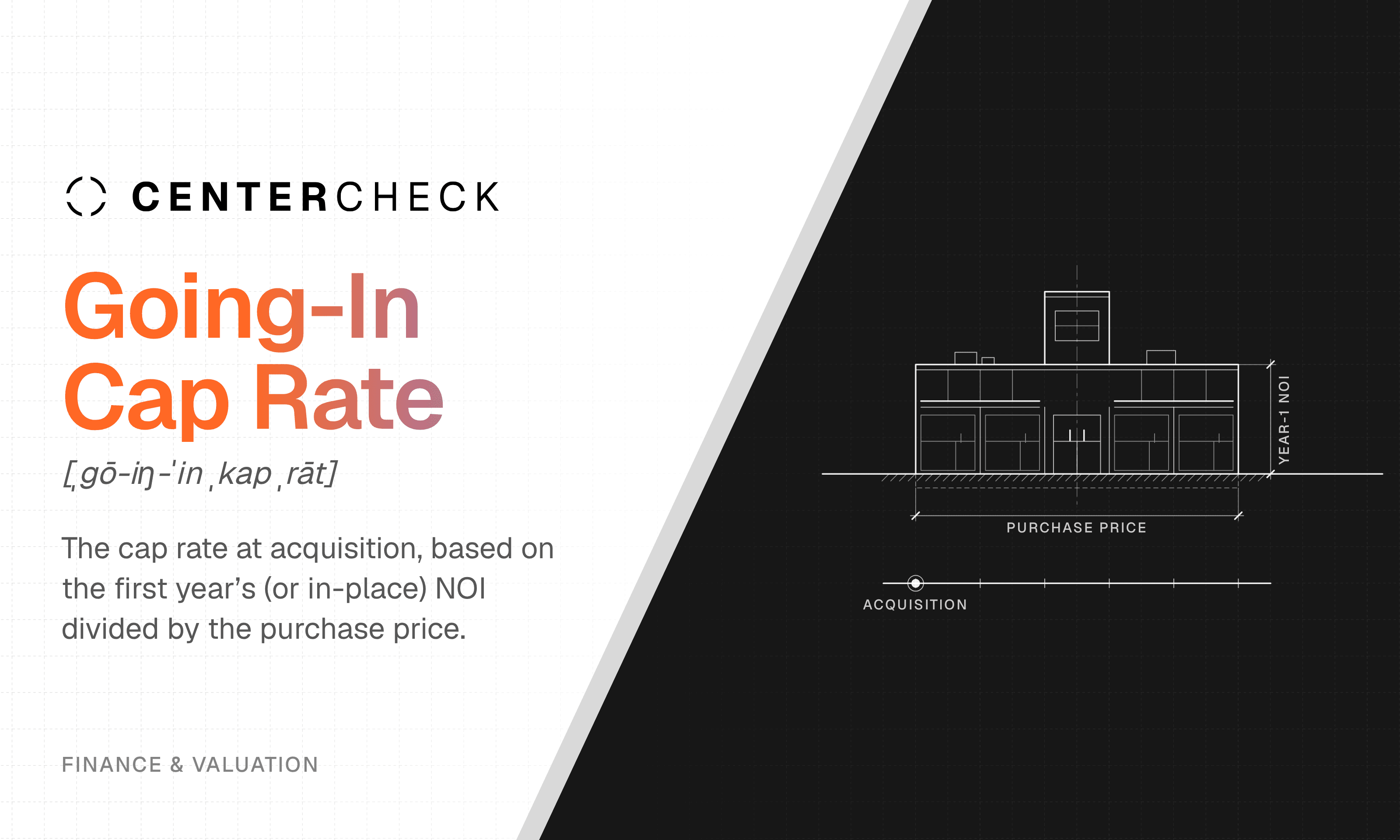
A 110,000 square foot center, 80% leased, earns $980,000 and sells for $14,000,000, a 7.0% cap rate. The plan: $2,500,000 for facade, parking and tenant improvements, lease the vacancy, replace a below-market tenant. Total cost with $400,000 of closing is $16,900,000. Stabilized NOI of $1,420,000 at 94% occupancy is an 8.4% yield on cost. At a 7.25% market cap rate the center is worth $19,586,207: $2,686,207 created, 16% of cost. On a 65% bridge loan, equity of $5,915,000 gains about 39% after selling costs, before interest carry.
In practice
Sponsors target under-managed centers. Bridge lenders fund purchase and capital on a loan-to-cost basis. Value-add funds commonly target 12% to 18% net IRRs and 1.5x to 2.0x multiples.
Watch for
A thin spread between yield on cost and market cap rate, which overruns and slow lease-up erase. In retail the plan lives or dies on tenant selection. Tenant mix analysis and merchandising mix shopping center reviews show which categories the trade area lacks. CenterCheck’s retail real estate analytics platform supplies the store level sales estimates to choose replacement tenants that will pay.
Related terms
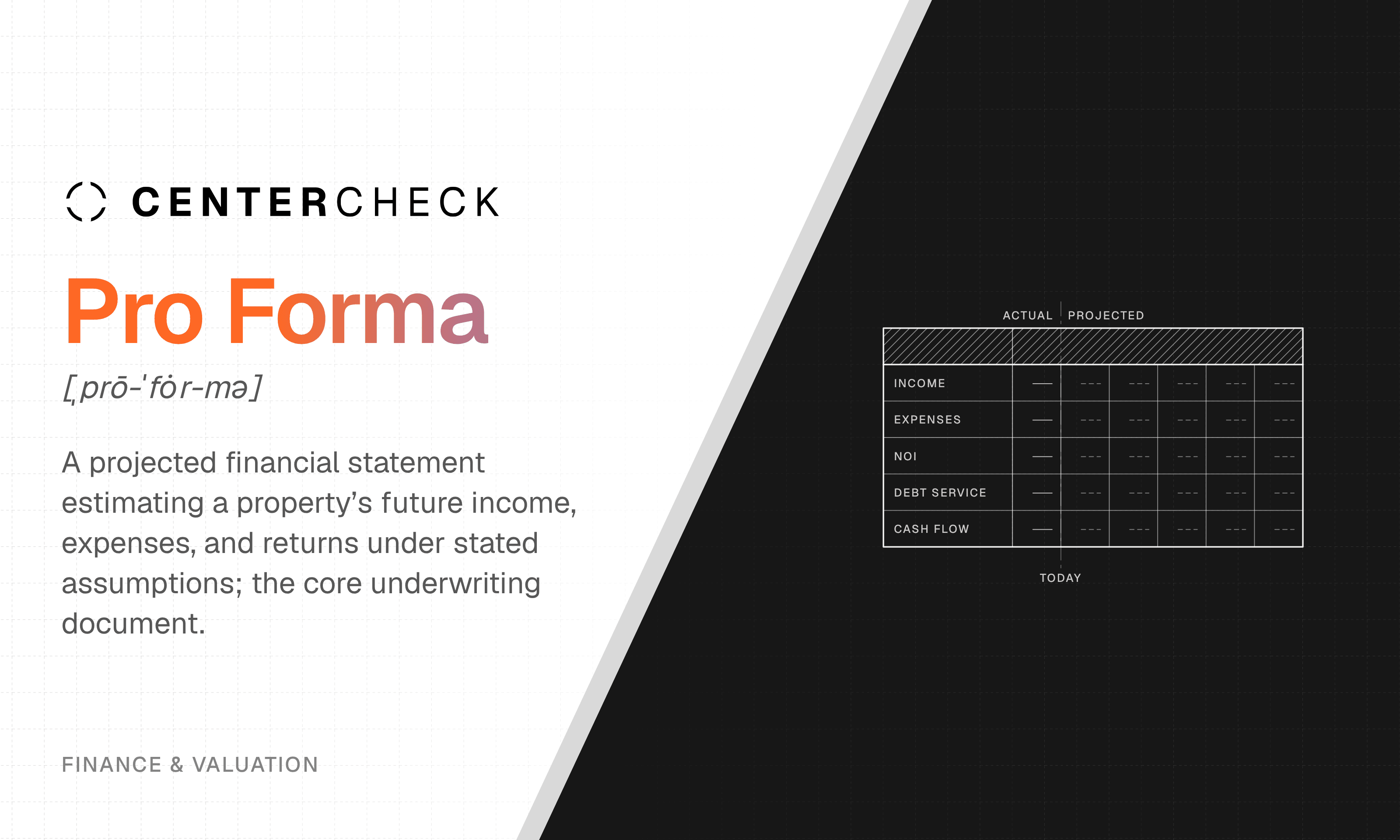
Pro Forma · LTC · NOI · IRR · Equity Multiple

Follow Us