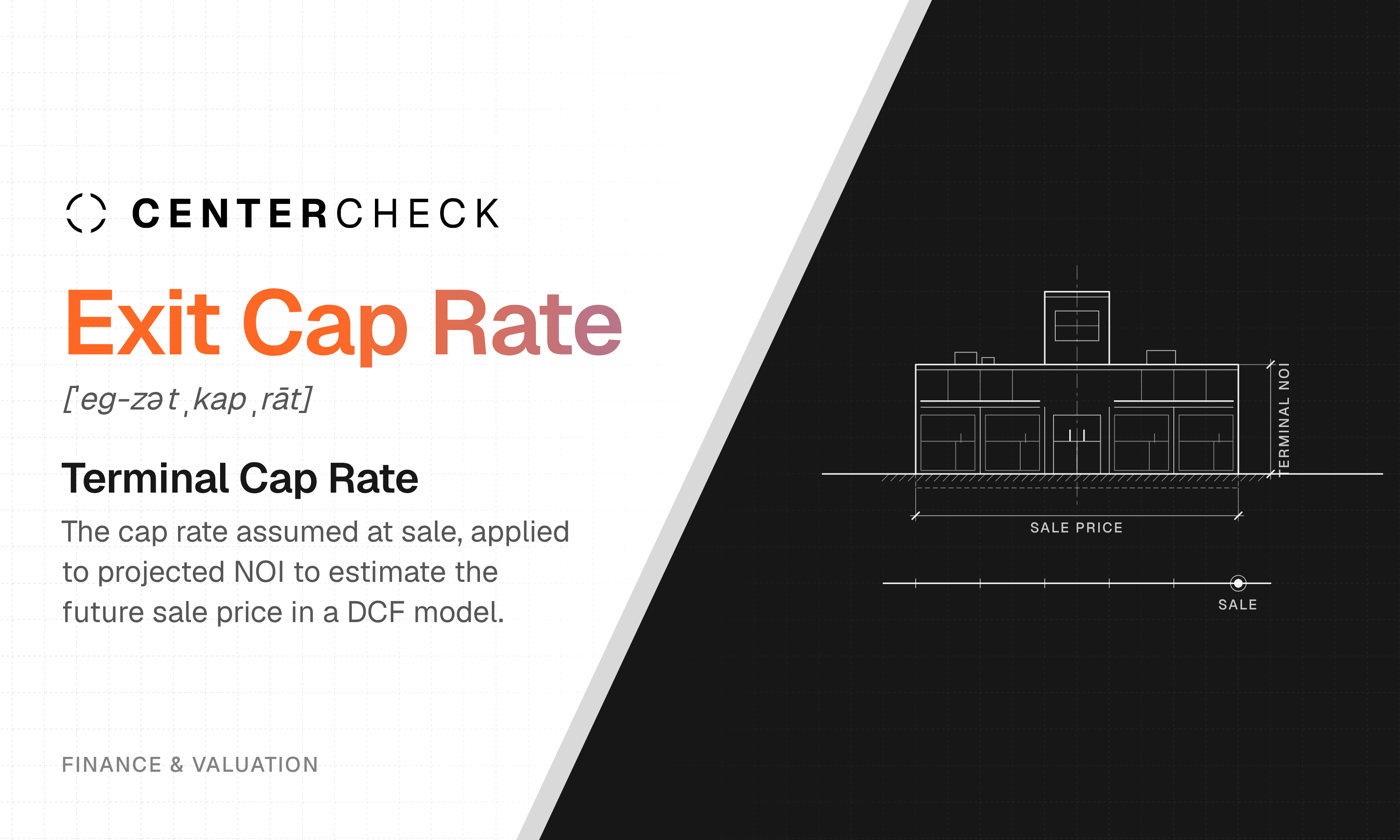
What Is an Exit Cap Rate? Terminal Cap Explained
The exit cap rate sets the assumed sale price. See standard spreads and an IRR sensitivity on a shopping center.
Definition
The exit cap rate, also called the terminal or reversion cap rate, is the cap rate assumed at sale. Applied to the following year’s NOI, it sets the sale price in a DCF model. On a short hold it is the most influential assumption in the underwriting.
Formula
Sale price = NOI in the year after sale ÷ exit cap rate. Net reversion = sale price − selling costs.
Example
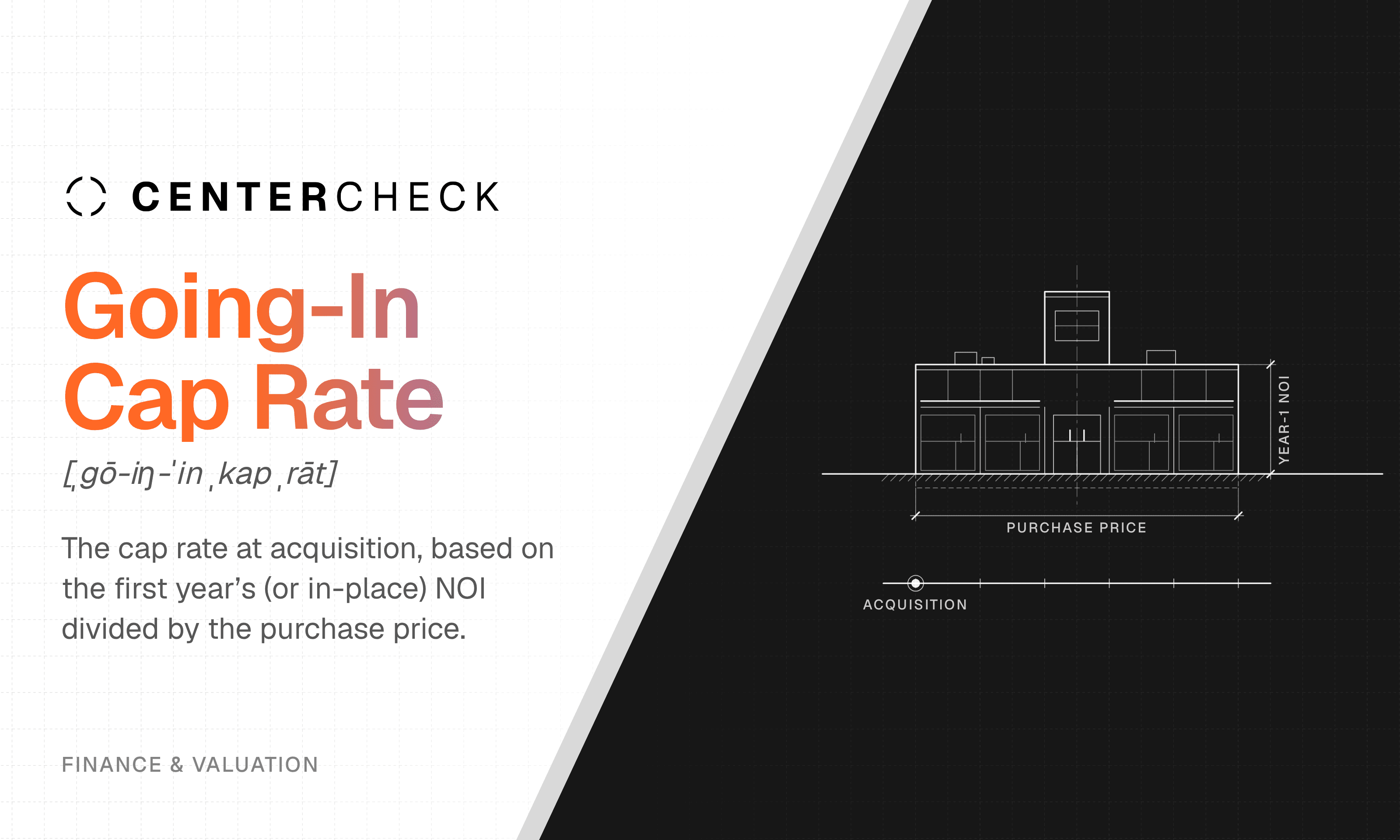
The center was bought at a 7.90% going-in cap rate. Year six NOI is $1,832,881; selling costs are 2%. At a flat 7.90% exit, net proceeds are $22,737,005 and the unlevered IRR is about 9.5%. At 8.25%: $21,772,404 and about 8.7%. At 8.75%: $20,528,267 and about 7.7%. Eighty-five basis points cost $2.2 million and nearly two points of return.
In practice
Acquisitions teams set it in every DCF. Investment committees challenge it first and demand a sensitivity grid. Lenders read it as refinance risk at maturity.
Watch for
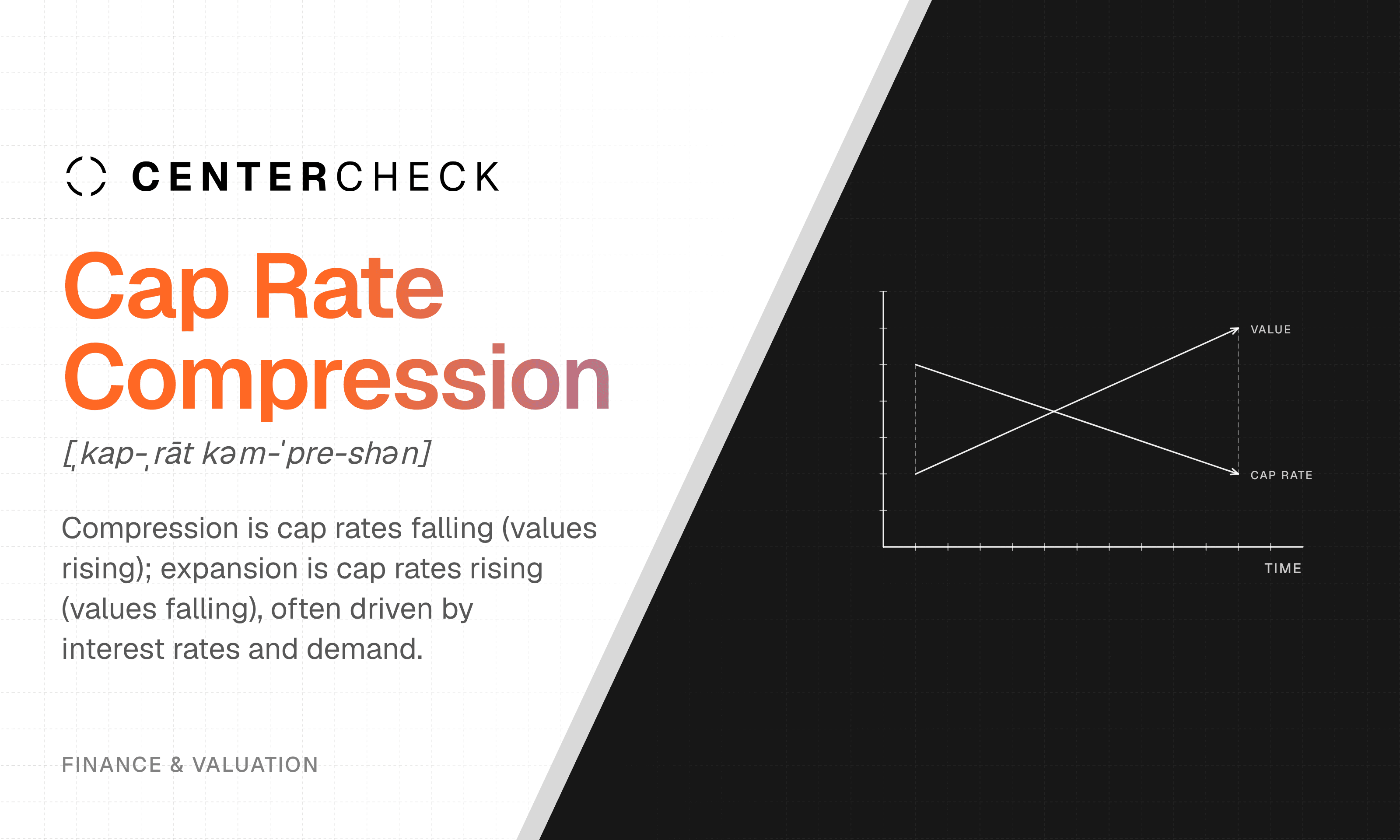
Standard practice adds 25 to 50 basis points to the going-in rate for a five-year hold, more for longer. An exit at or below going-in assumes the market will pay more per dollar of income. The exit buyer prices the tenancy as it stands at sale, so tenant mix analysis and retail tenant performance over the hold matter. CenterCheck’s store level estimates show whether that tenancy is strengthening or fading.
Related terms
Going-In Cap Rate · DCF · IRR · Cap Rate Compression

Follow Us