What Is a Pro Forma in Real Estate?
A pro forma projects income, expenses and returns. See in-place versus broker pro forma NOI on a shopping center and what to haircut.
Definition
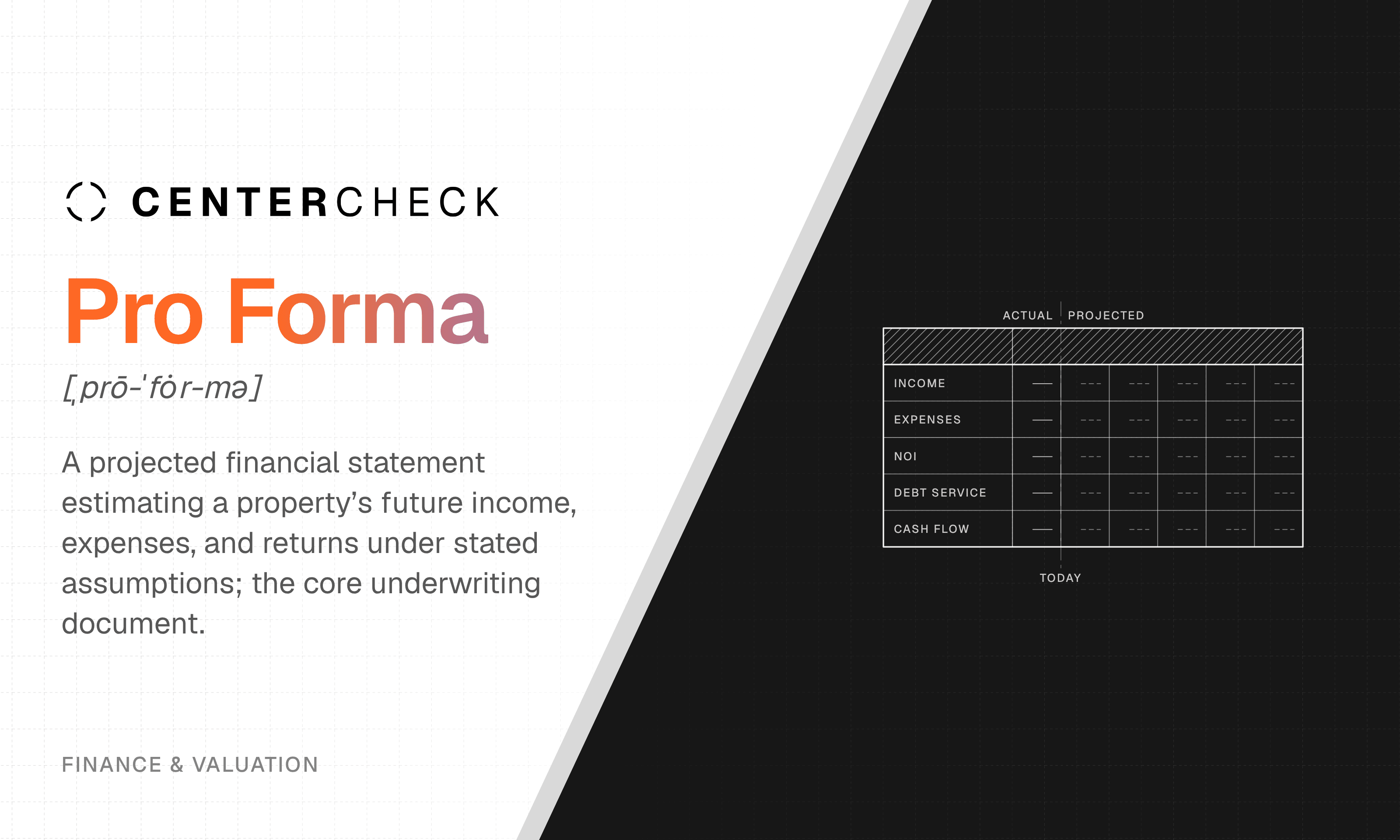
A pro forma is a projected financial statement estimating a property’s future income, expenses, cash flow and returns under stated assumptions. It is the core underwriting document. It is a forecast, not a record.
Formula
Potential gross income − vacancy and credit loss + recoveries + other income = effective gross income. Less operating expenses = NOI. Less reserves, leasing costs and debt service = cash flow to equity.
Example
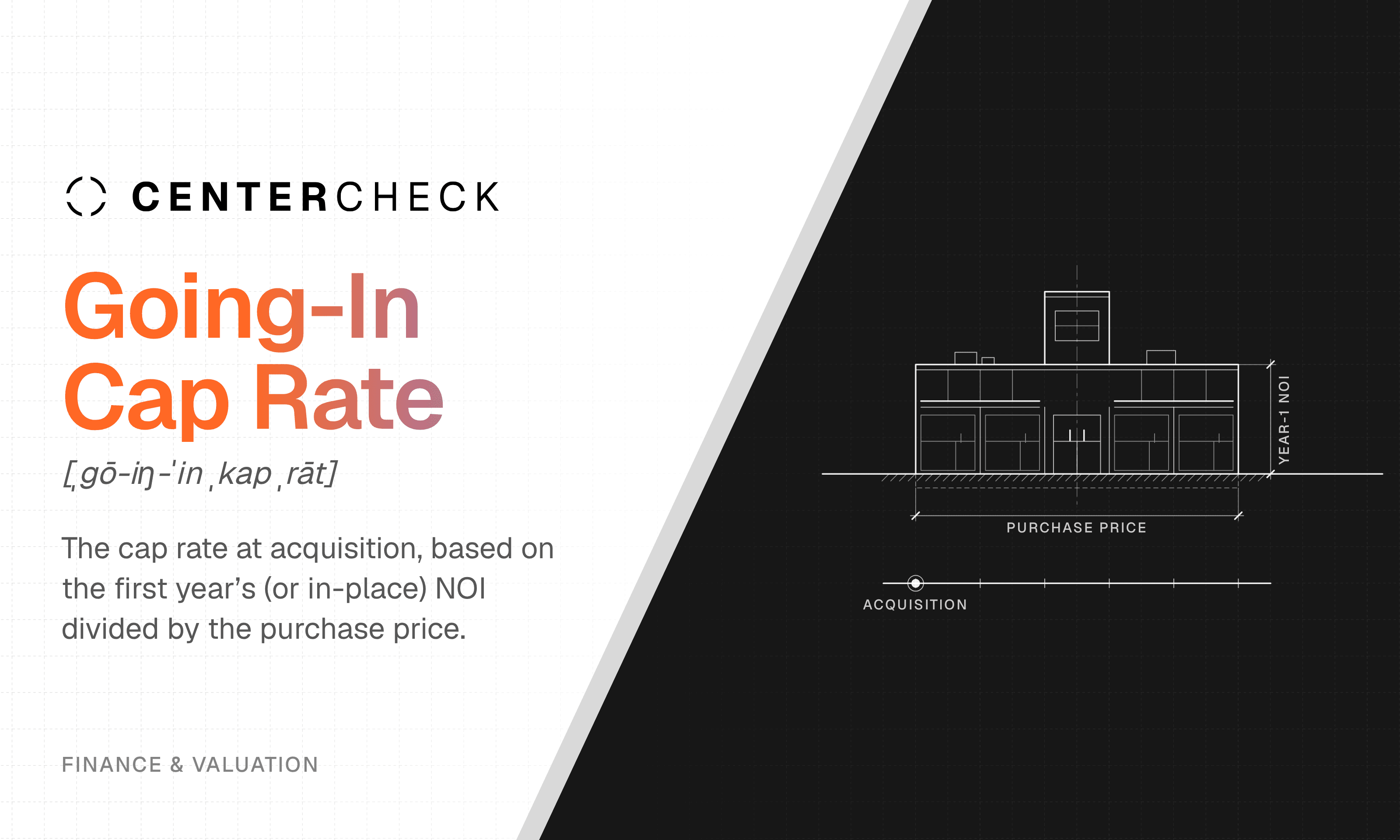
The broker’s offering memorandum shows the center 97% leased at $22 per square foot: NOI of $1,930,000. The rent roll shows 92% at $20: NOI of $1,620,000. The $310,000 gap is worth about $3.9 million at a 7.9% cap rate. The buyer pays for in-place income plus a discounted share of the upside.
In practice
Acquisitions teams underwrite value with it. Lenders build a more conservative one to size loans. Developers use it to secure construction financing. Asset managers compare budget with actuals.
Watch for
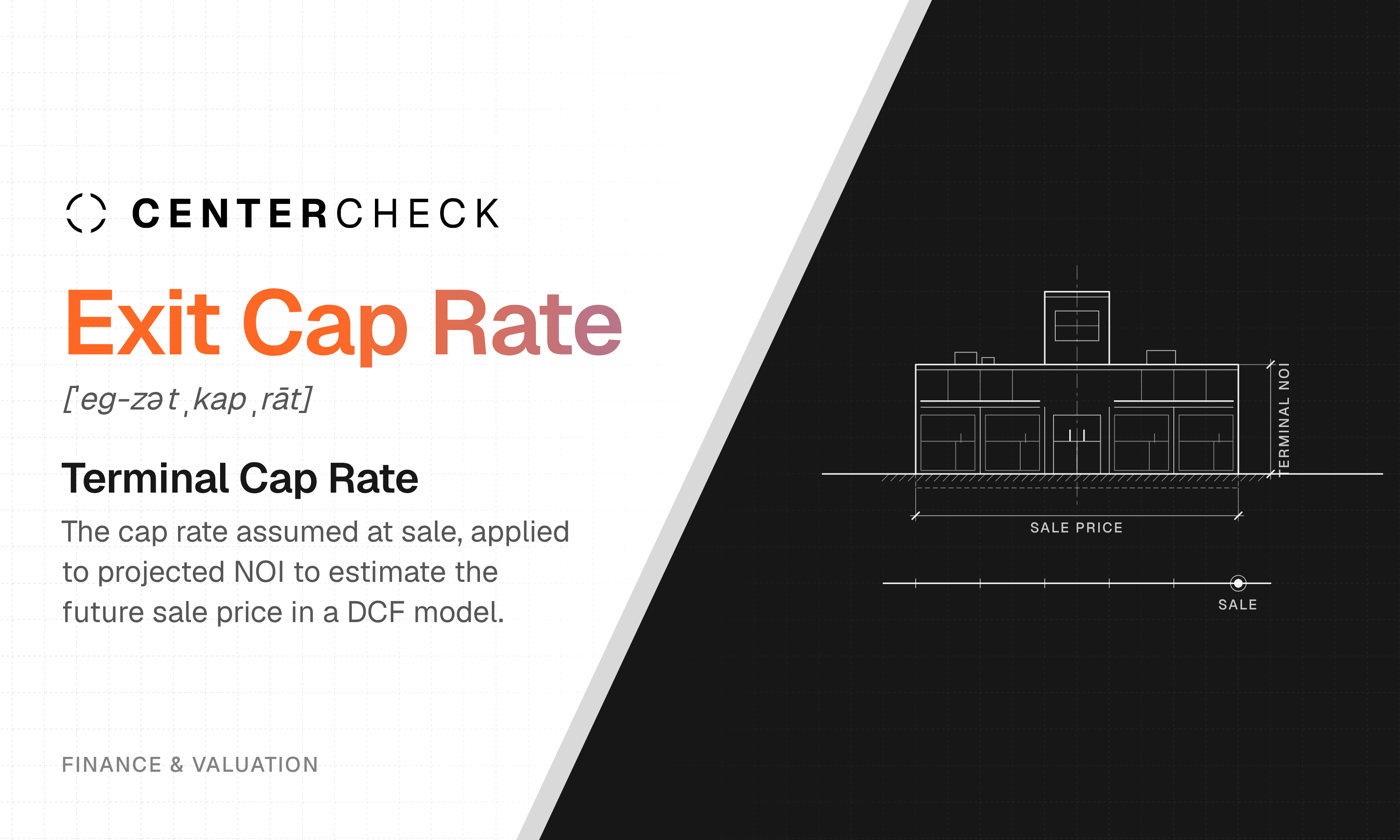
Rents growing faster than tenant sales. Too little downtime and tenant improvement cost on rollover. An exit cap rate at or below going-in. No downside case. Cushman & Wakefield put shopping center vacancy at 6.0% and asking rents at $25.65 per square foot in Q2 2026, a useful national check. The hardest input is whether tenants can pay the projected rent; retail underwriting data that helps estimate store revenue, such as CenterCheck’s sales per square foot by retailer, answers it.
Related terms
NOI · DCF · Going-In Cap Rate · Exit Cap Rate

Follow Us