What Is Loan-to-Cost (LTC)? Construction Lending
LTC is the loan divided by total project cost. See a retail development example, 2026 ranges and how overruns hit equity.
Definition
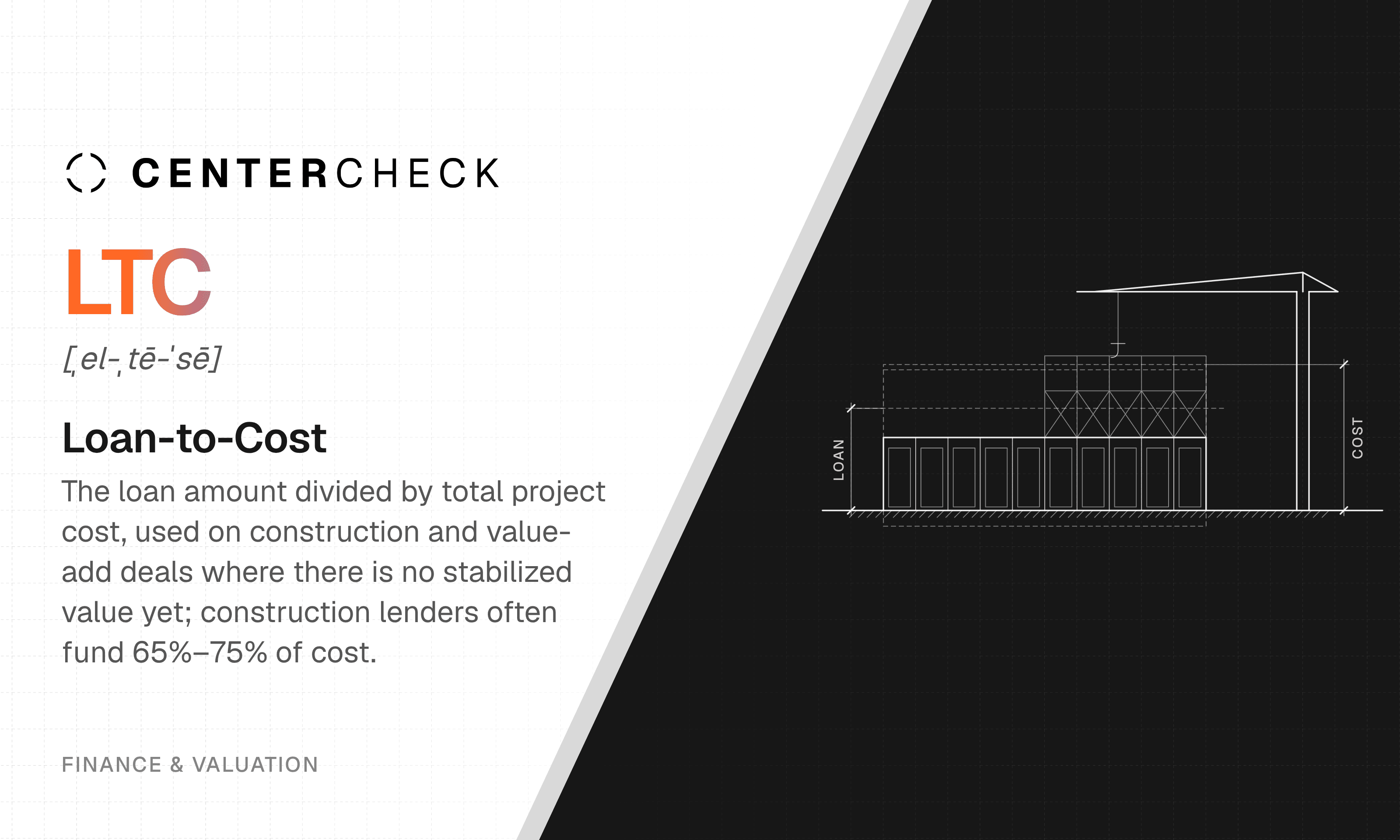
Loan-to-cost is the loan amount divided by a project’s total cost: land, hard costs, soft costs and financing costs. Lenders use it on construction and heavy value-add deals where no stabilized value exists yet. Construction lenders typically fund 65% to 75% of cost, banks at the lower end.
Formula
LTC = loan amount ÷ total project cost. Yield on cost = stabilized NOI ÷ total project cost.
Example
A developer builds a 90,000 square foot grocery-anchored center: $3,000,000 of land, $14,000,000 of hard costs, $2,800,000 soft, $1,200,000 of financing costs, $21,000,000 in all. A 65% LTC loan is $13,650,000; equity is $7,350,000. Stabilized NOI of $1,700,000 is an 8.1% yield on cost. At a 6.75% market cap rate the finished center is worth $25,185,185, a 54% loan-to-stabilized-value. A 10% overrun on hard costs adds $1,400,000, all of it from equity.
In practice
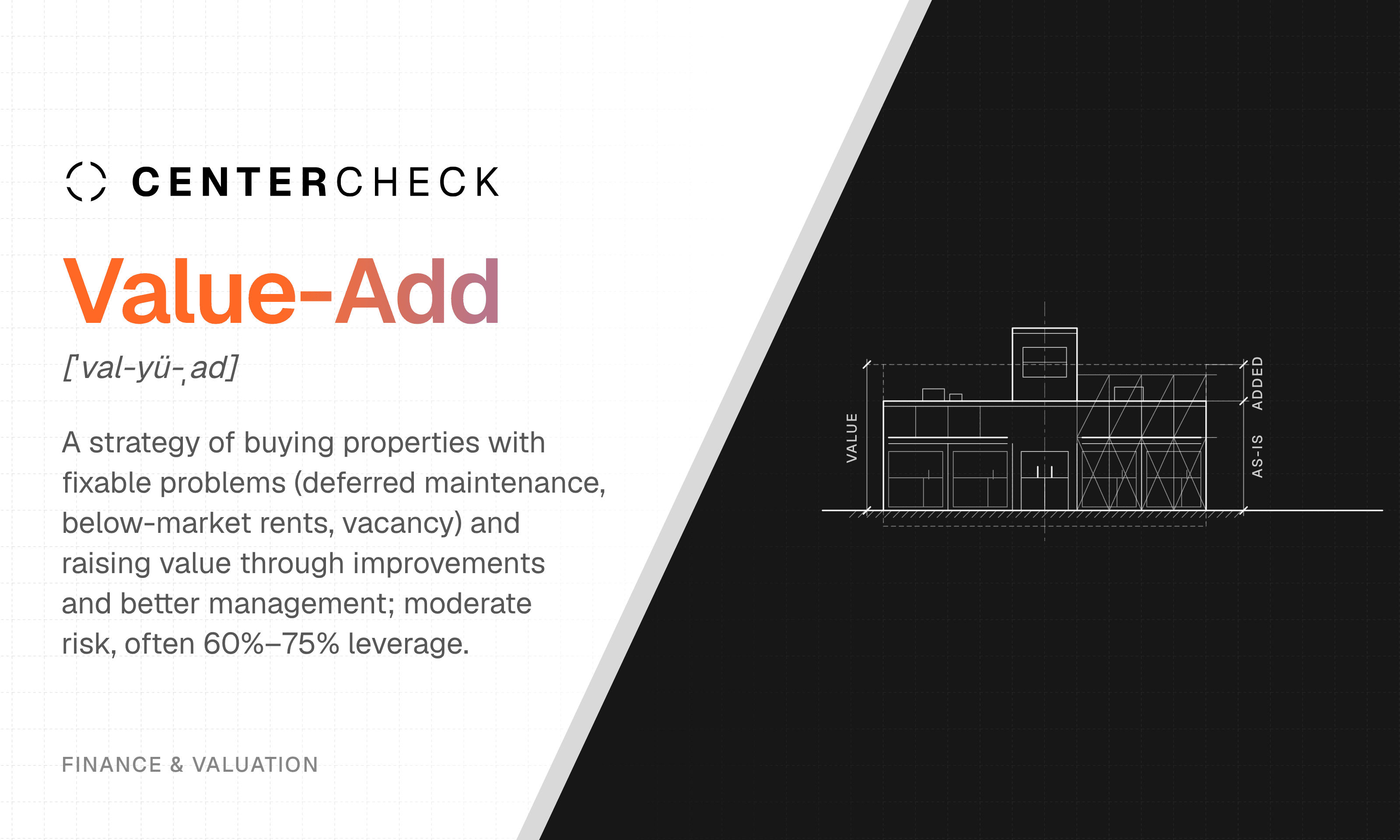
Construction lenders set loan size and equity with it. Developers build the capital stack around it. Bridge lenders apply it to purchase price plus renovation budget.
Watch for
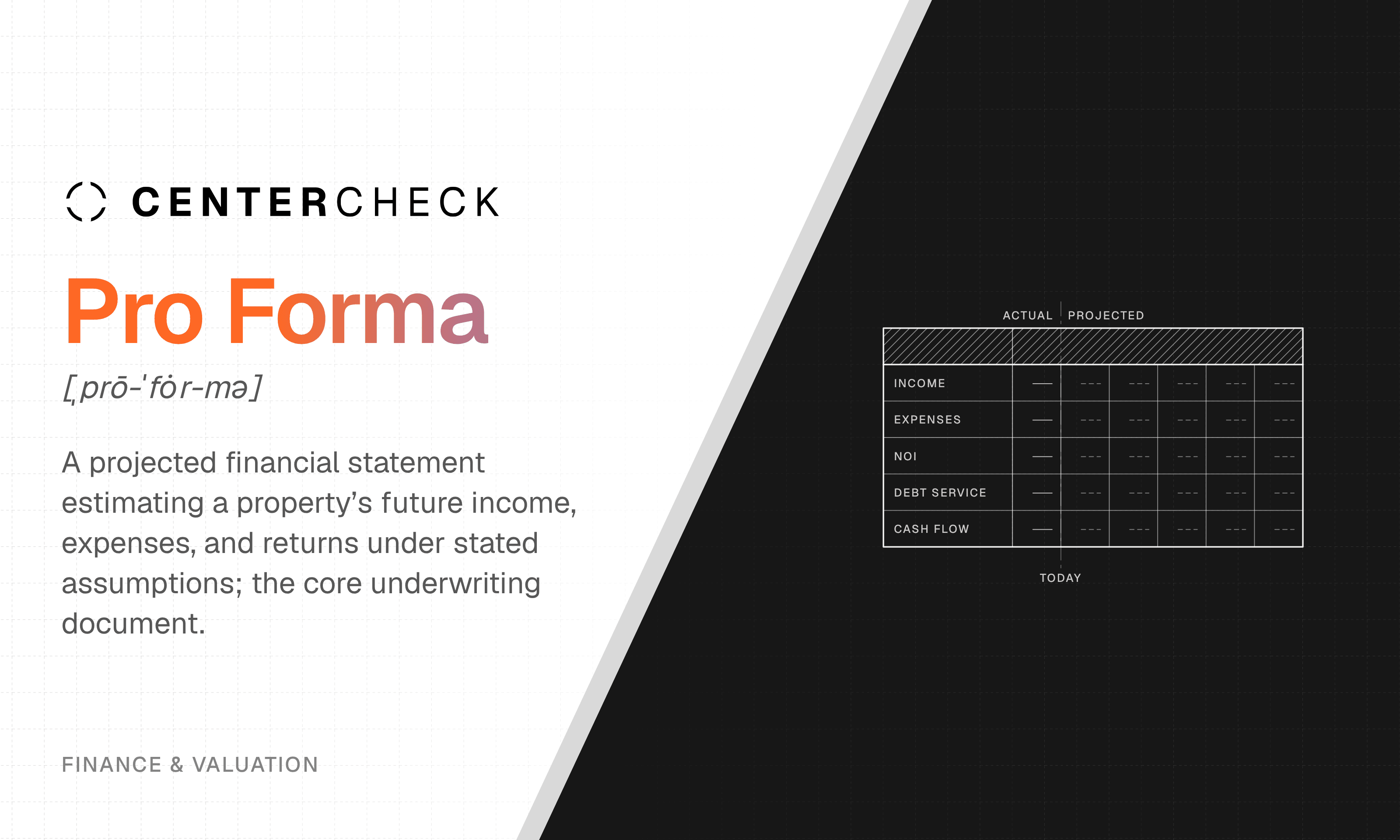
Low LTC on an overbuilt project is still risk. The construction loan must refinance at stabilization, which requires DSCR and LTV to work then. Pro forma rents should be tested against retail sales estimates by location; data for retail developers, including CenterCheck’s estimates for comparable tenants in the trade area, serves that check.
Related terms
LTV · Pro Forma · Value-Add

Follow Us