What Is IRR in Real Estate? Definition and Example
IRR is the rate that sets NPV to zero. See unlevered and levered IRR on a shopping center deal and where IRR misleads.
Definition
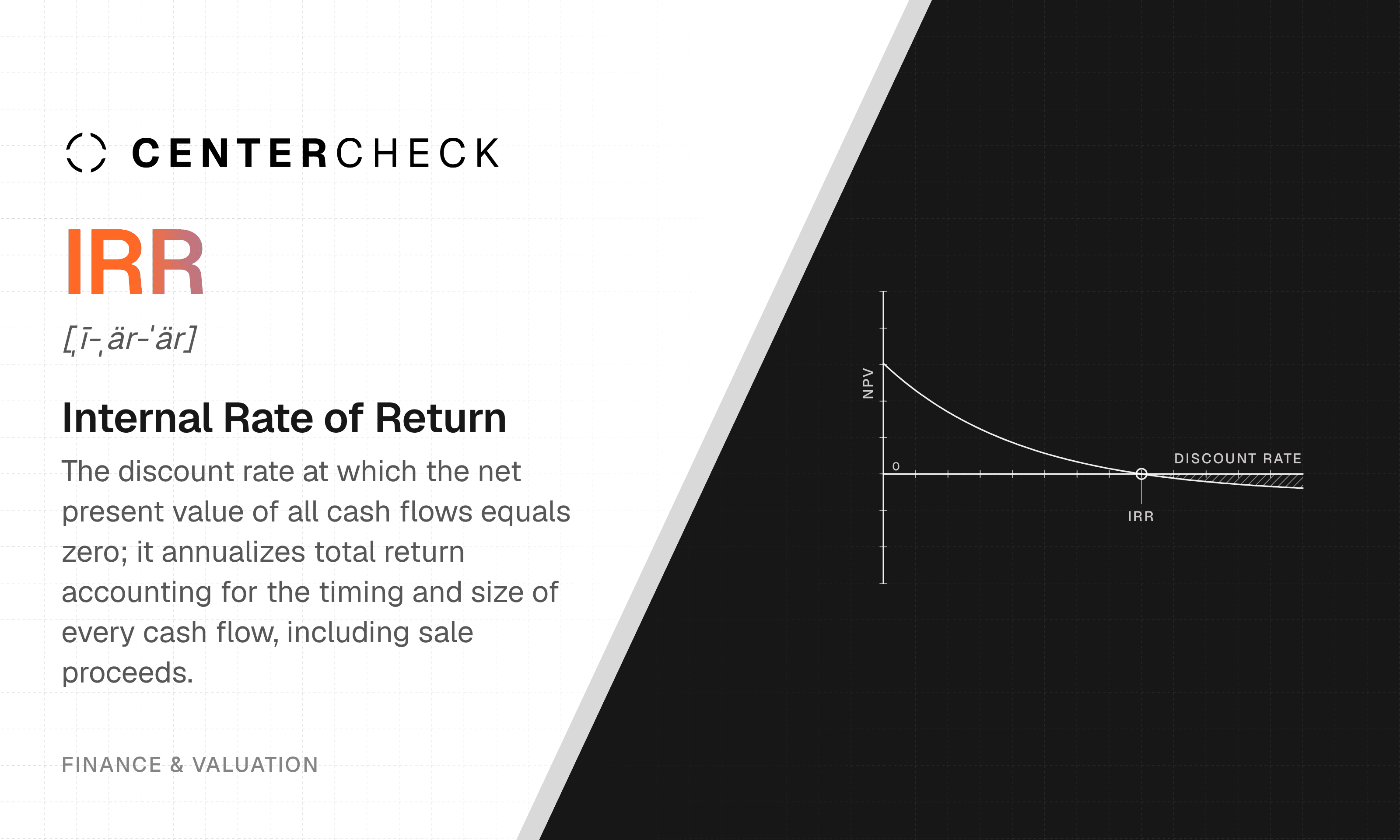
The internal rate of return is the discount rate at which the net present value of an investment’s cash flows, including purchase price and sale proceeds, equals zero. It states total return as one annualized percentage that accounts for the size and timing of every cash flow.
Formula
0 = −initial investment + Σ CFₜ ÷ (1 + IRR)ᵗ. Solved by iteration.
Example
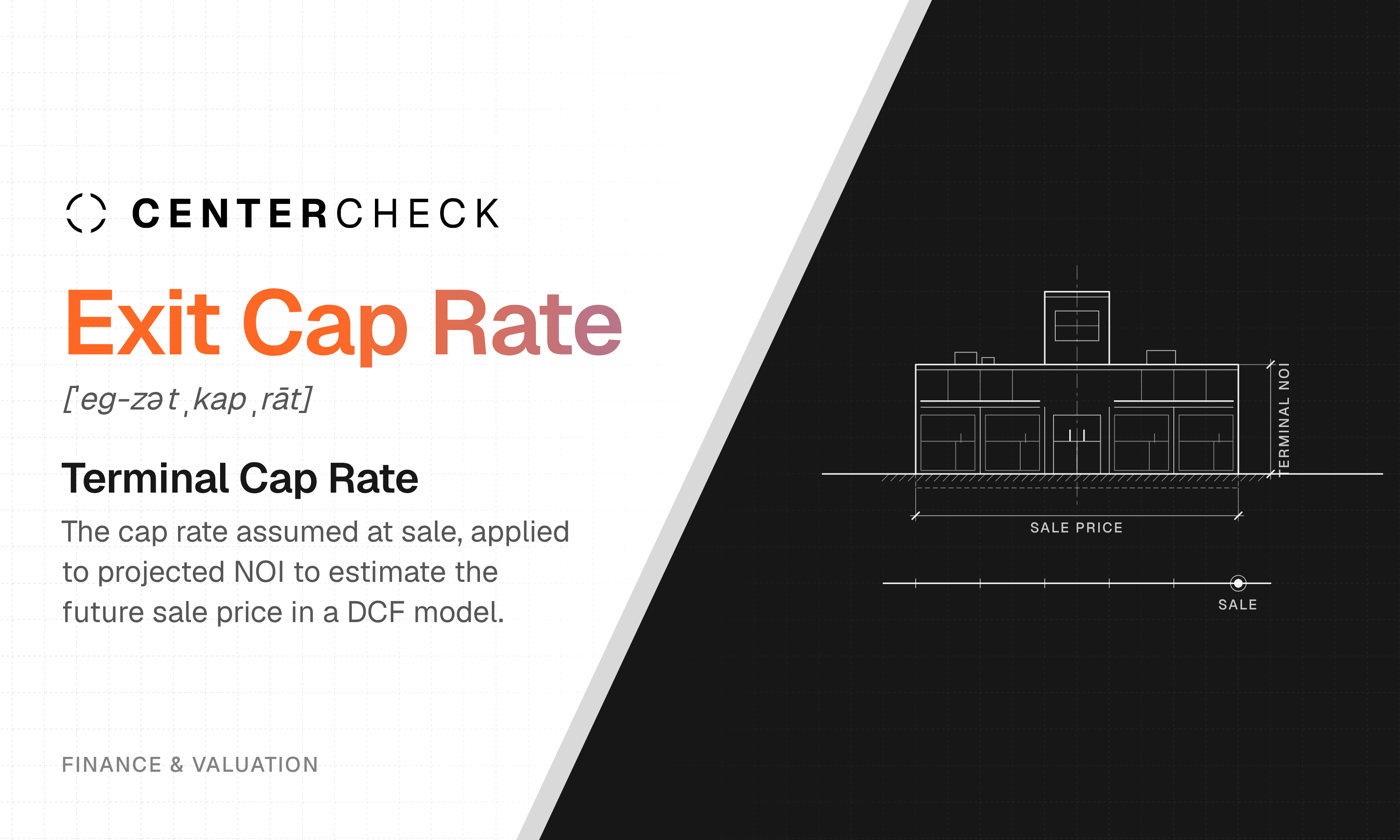
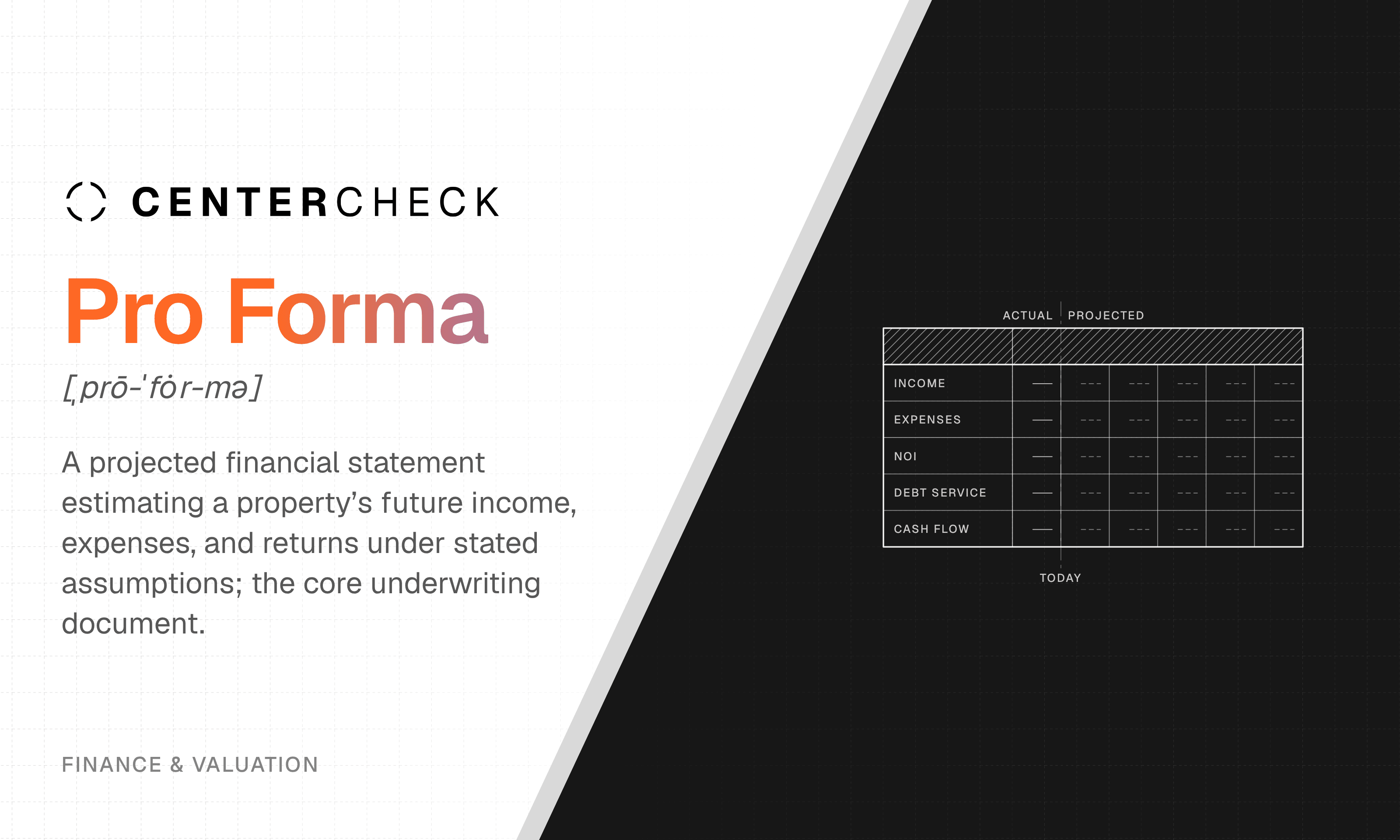
Pay $20,500,000 for the center, collect $1,500,000 rising to $1,660,000 a year over five years, sell for net proceeds of $21,772,404. The unlevered IRR is about 8.7%. With a 60% loan at 6.25%, the levered IRR rises to roughly 10.9%, because growth and loan paydown accrue to a smaller equity base.
In practice
Funds set hurdle rates and promote tiers on it. Committees rank deals by it. Buyers back into a price from a target IRR.
Watch for
IRR rewards speed. A quick flip can post a high IRR on a small profit, so read it beside the equity multiple. On a five-year hold most of it comes from the exit assumption; tenant durability drives the rest. Retail tenant risk analysis built on store level sales estimates, such as CenterCheck’s, shows whether a chain will keep this particular location, which its corporate filings cannot.
Related terms
NPV · DCF · Equity Multiple · Cash-on-Cash Return

Follow Us