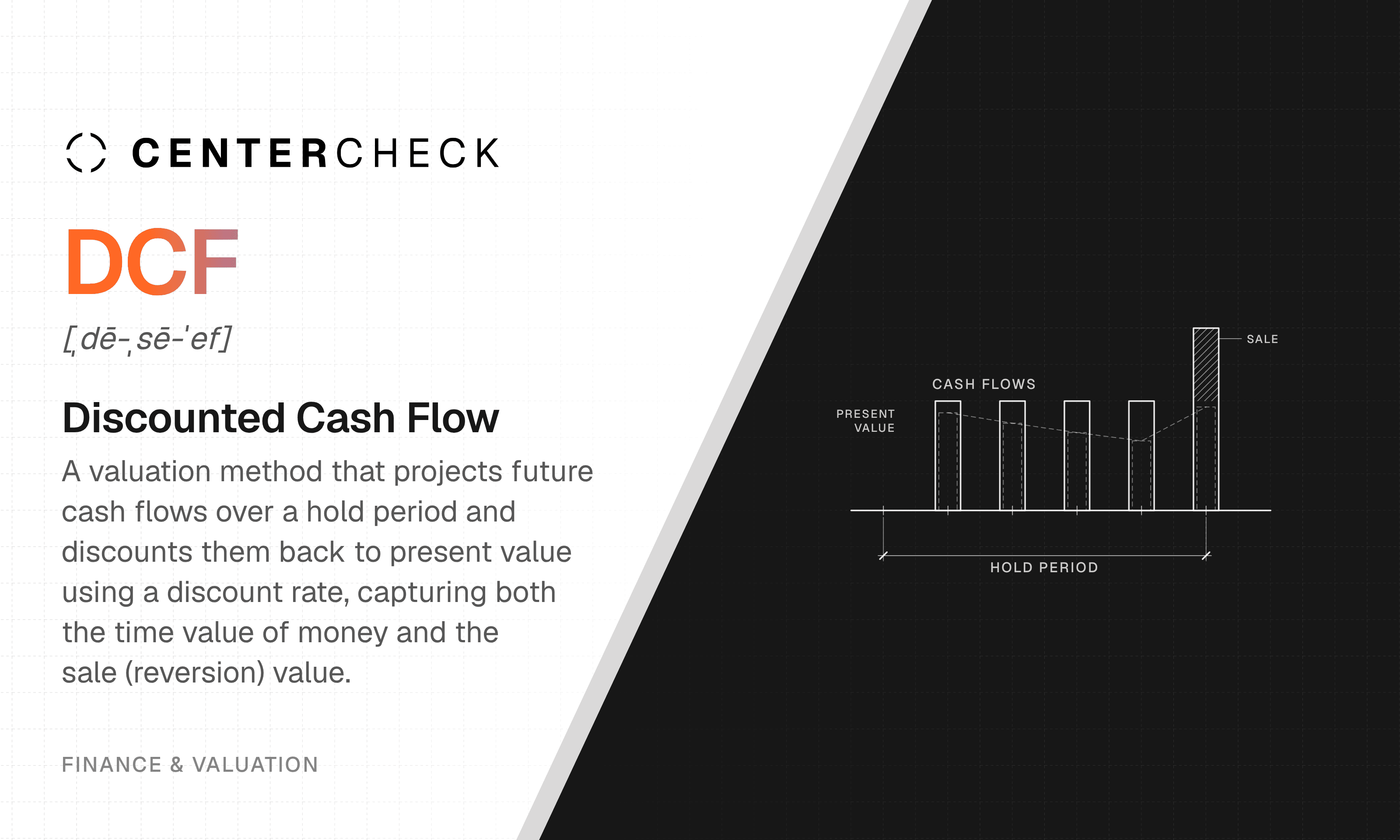
What Is DCF in Real Estate? Formula and Example
DCF values a property by discounting future cash flows and sale proceeds to today. See a five-year shopping center model.
Definition
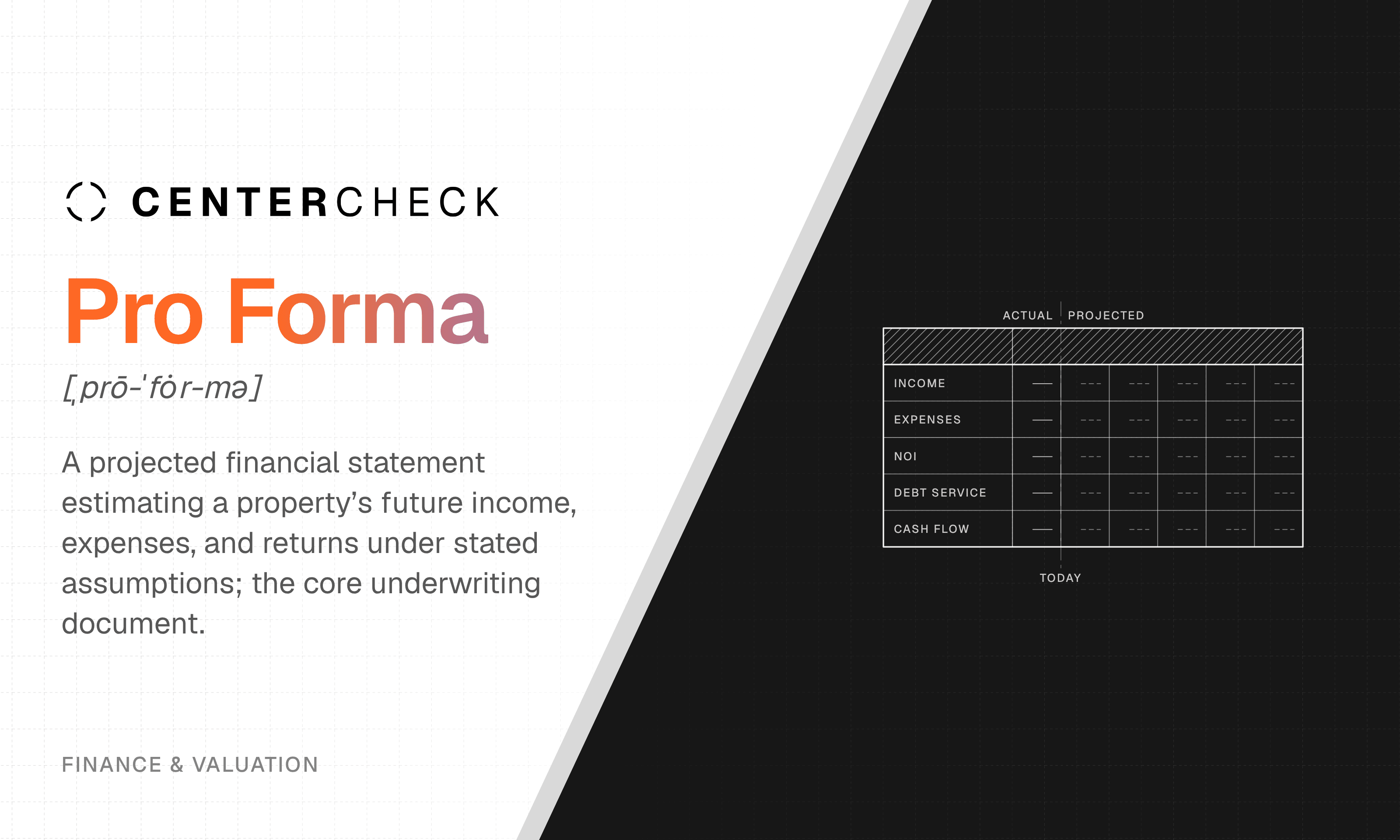
Discounted cash flow values a property by projecting its cash flows over a holding period, including the proceeds of a future sale, and discounting each back to present value at a required rate of return. It captures what a single-year cap rate cannot: lease rollover, rent growth and capital spending.
Formula
Value = Σ CFₜ ÷ (1 + r)ᵗ + reversion ÷ (1 + r)ⁿ, where r is the discount rate and the reversion is the sale price less selling costs.
Example
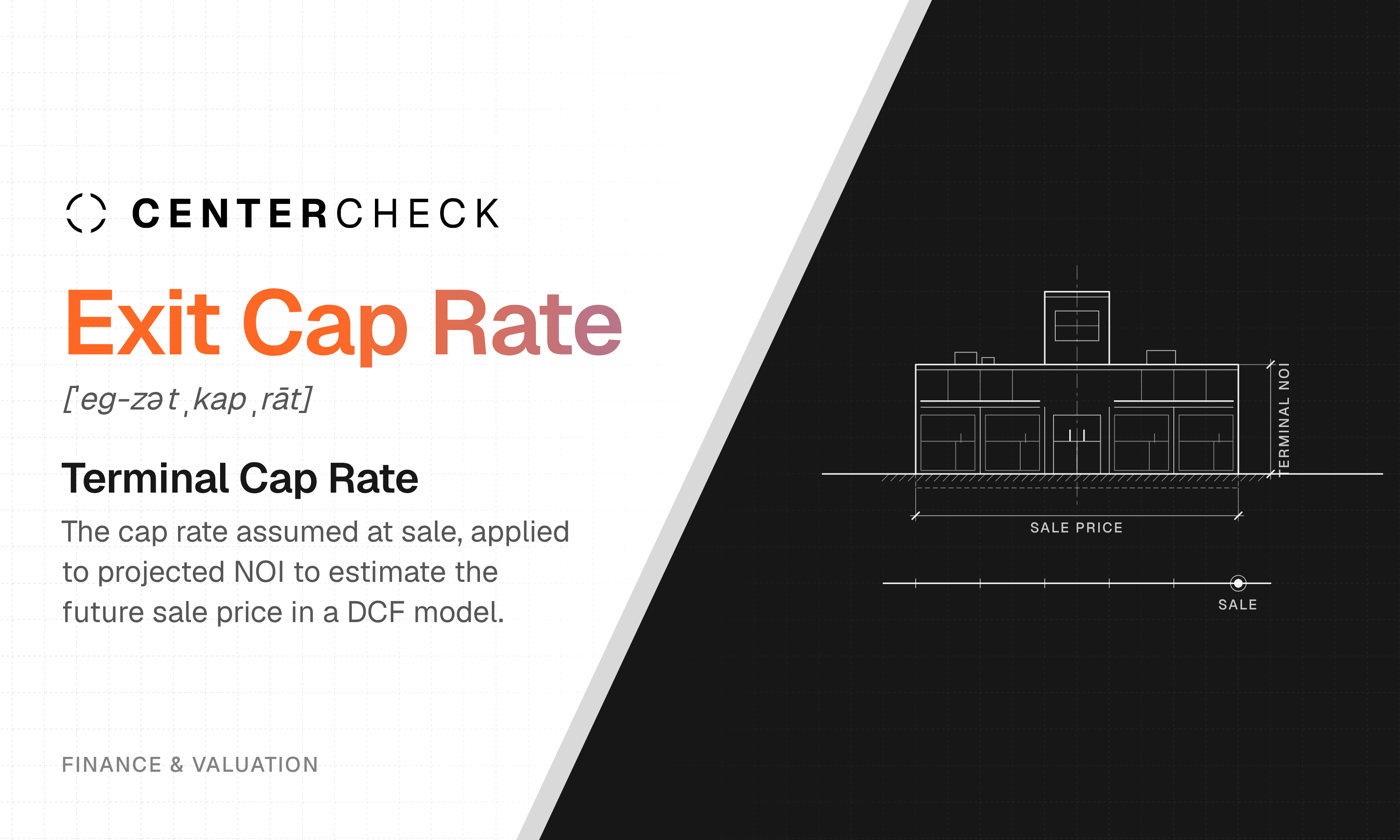
The neighborhood center produces $1,500,000 of cash flow in year one, growing to $1,660,000 by year five. Year six NOI of $1,832,881 at an 8.25% exit cap rate, less 2% selling costs, gives a reversion of $21,772,404. Discounted at 8.5%, the total is $20,680,369. The sale accounts for about 70% of value.
In practice
Acquisitions teams set maximum bids with it. Appraisers use it for multi-tenant retail with staggered leases. Funds mark portfolios to it each quarter.
Watch for
The exit cap rate and discount rate drive most of the answer. Renewal probability is the hardest retail input. Store level sales data shows which tenants are outperforming and likely to stay, which turns shopping center acquisition due diligence from guesswork into evidence. CenterCheck’s tenant sales estimates serve that purpose.
Related terms
NPV · IRR · Discount Rate · Exit Cap Rate

Follow Us