What Is Debt Yield? Formula and 2026 Minimums
Debt yield is NOI over the loan amount. Learn why lenders use it, the 10% minimum and 2026 retail CMBS benchmarks.
Definition
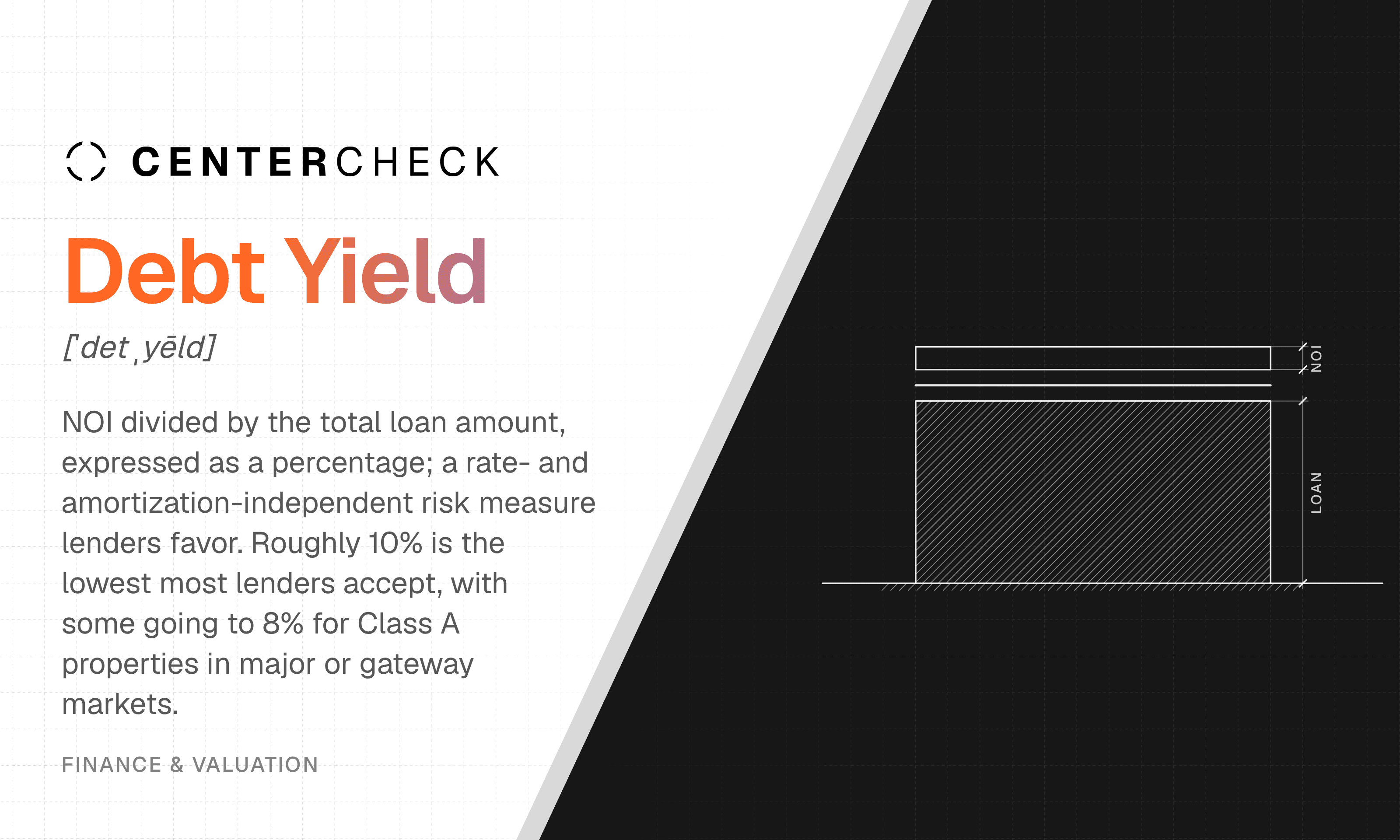
Debt yield is net operating income divided by the loan amount. It shows what a lender would earn if it took the property back on day one. Because it ignores interest rate, amortization and cap rate, it is the cleanest test of leverage. About 10% is the conventional minimum; some lenders accept 8% on Class A assets in major markets.
Formula
Debt yield = NOI ÷ loan amount. Maximum loan = NOI ÷ minimum debt yield.
Example
NOI of $1,620,000 on a $13,325,000 loan is a 12.2% debt yield. At a 10% minimum the loan could reach $16,200,000. Raise the interest rate from 6.25% to 7.25% and DSCR falls from 1.65x to about 1.48x. The debt yield does not move.
In practice
CMBS and balance-sheet lenders set minimums in sizing. Examiners compare leverage across loans with it. Credit analysts read a low debt yield as refinance risk when rates rise.
Watch for
It punishes lease-up assets, since it uses in-place NOI only. Benchmarks vary by type: 2026 CMBS retail loans averaged 11.37%, multifamily 8.20% (Trepp). Everything rests on the quality of in-place NOI, so retail NOI benchmarking and tenant sales reporting matter. CenterCheck’s store level estimates supplement the reporting most tenants never provide.
Related terms
DSCR · LTV · NOI · Cap Rate

Follow Us