What Is Debt Service in Commercial Real Estate?
Debt service is annual principal and interest. See the payment formula, the loan constant and a shopping center loan example.
Definition
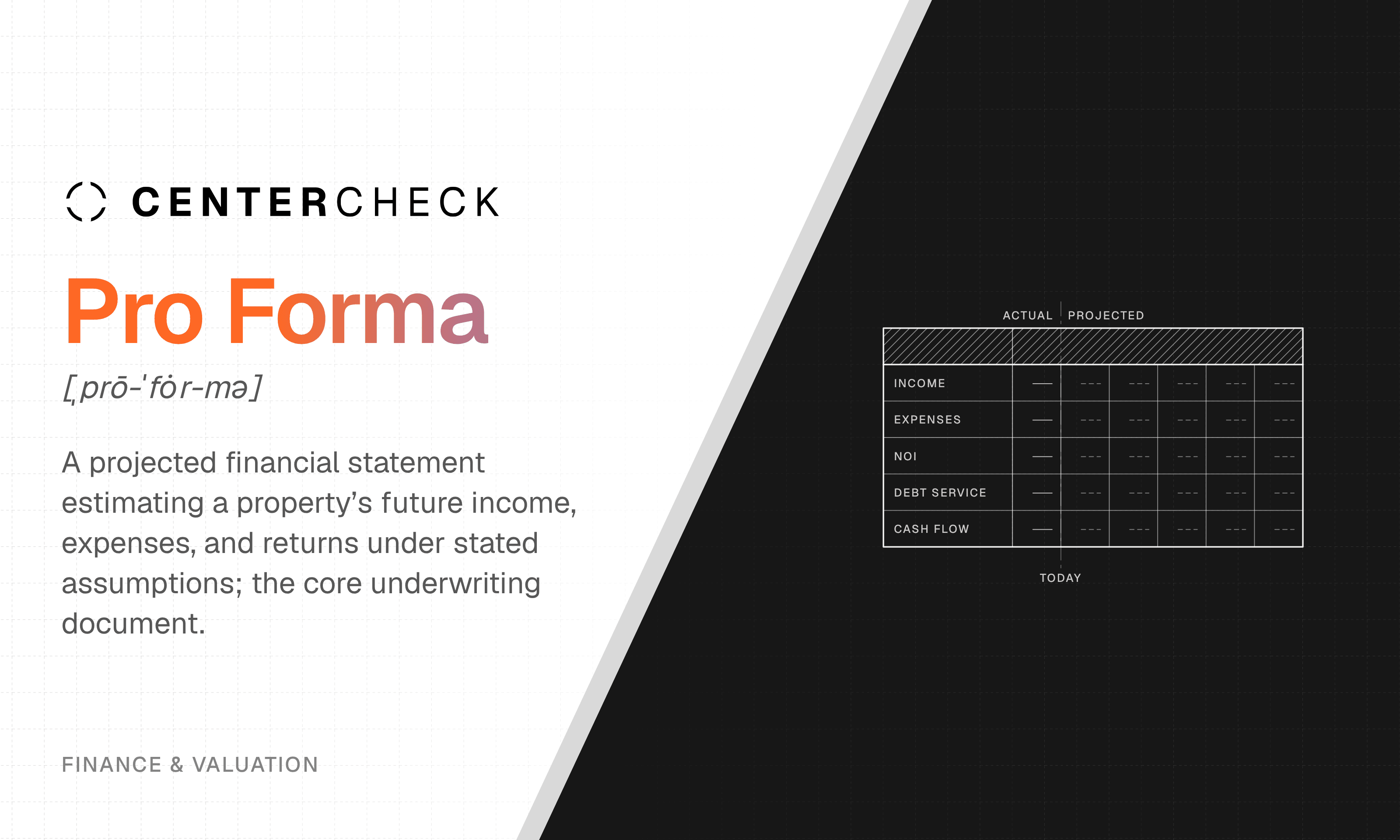
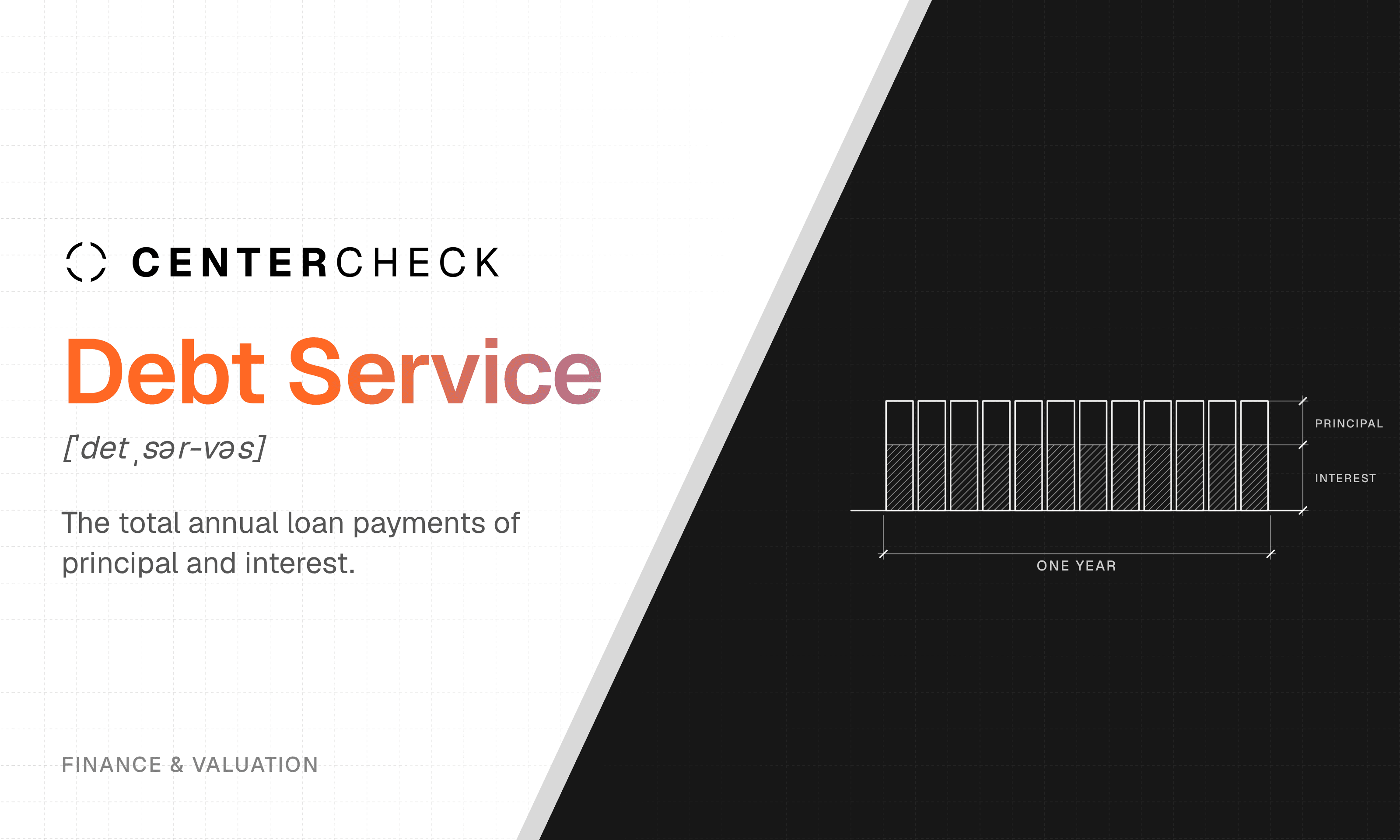
Debt service is the total of a loan’s scheduled principal and interest payments, usually stated per year. It is the claim on a property’s income that comes before equity, the denominator of DSCR and the gap between NOI and cash flow to the owner.
Formula
Monthly payment = L × i(1 + i)ⁿ ÷ ((1 + i)ⁿ − 1), where L is the loan, i the monthly rate and n the number of payments. Annual debt service is twelve payments. Loan constant = annual debt service ÷ loan amount.
Example
$13,325,000 at 6.25% over 30 years costs about $82,045 a month, $984,536 a year, a 7.39% constant. Year one splits into roughly $828,400 of interest and $156,200 of principal. On a 25-year schedule the same loan costs $1,054,796. Interest-only costs $832,813.
In practice
Lenders test it against NOI. Borrowers compare quotes on annual cost and constant, not rate alone. Equity investors subtract it to project distributions.
Watch for
Taxes and insurance are not debt service, even when escrowed. Floating-rate loans without a cap can see it jump. It excludes the balloon due at maturity. Whether a center can keep paying depends on its tenants: a tenant health ratio above its category norm is the earliest warning, and CenterCheck’s store level sales estimates let a lender run that check across a full rent roll.
Related terms
Amortization · DSCR · Debt Yield · Cash-on-Cash Return

Follow Us