What Is Cash-on-Cash Return? Formula and Example
Cash-on-cash is annual pre-tax cash flow over equity invested. See a shopping center example and how negative leverage works.
Definition
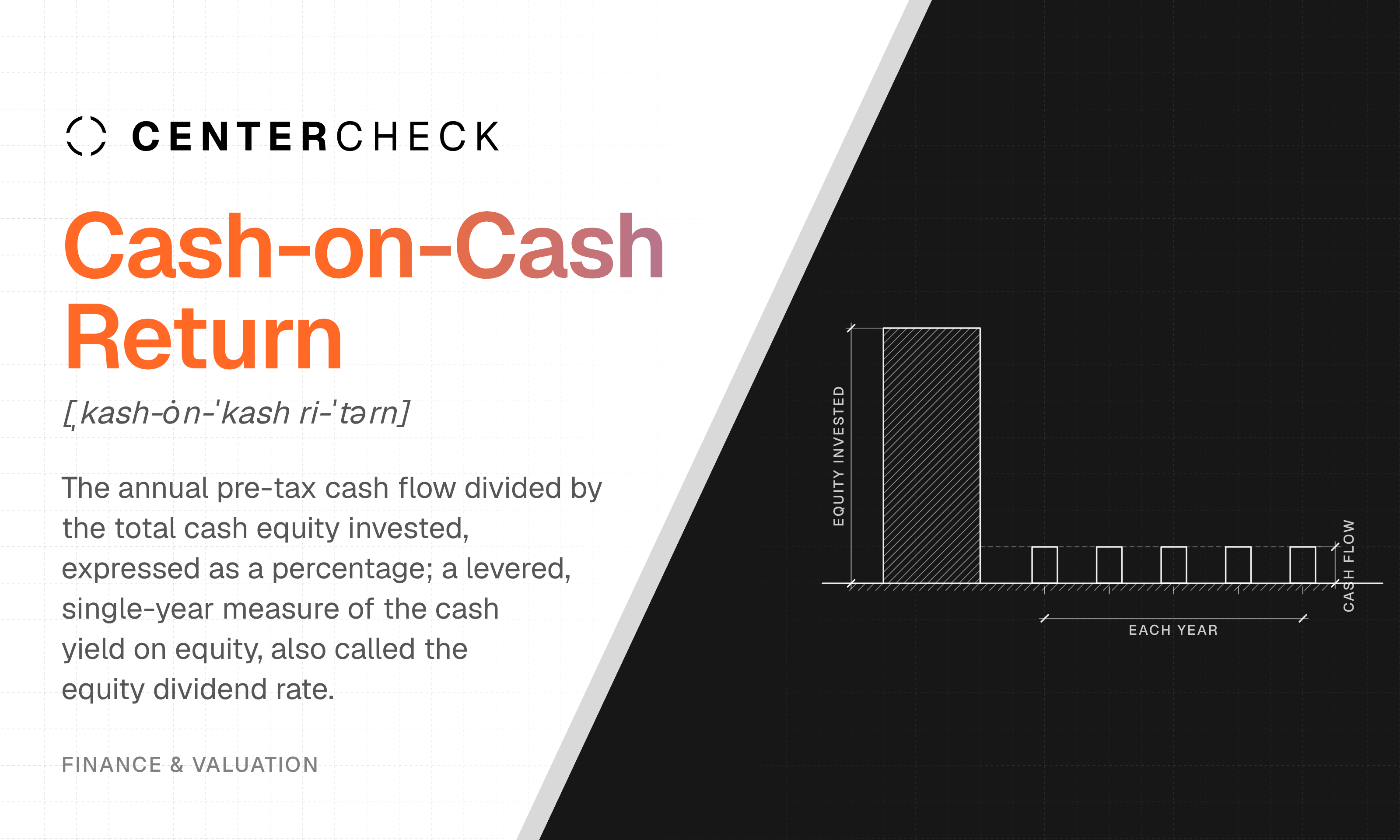
Cash-on-cash return is a property’s annual pre-tax cash flow after debt service divided by the cash equity invested. It is a levered, single-year measure of the cash yield on equity, also called the equity dividend rate.
Formula
Cash-on-cash = annual pre-tax cash flow ÷ total cash invested.
Example
The center is bought for $20,500,000 with a 60% loan of $12,300,000 at 6.25% over 30 years. Debt service is $908,803. Equity, including $400,000 of closing costs, is $8,600,000. Cash flow of $1,500,000 less debt service leaves $591,197, a 6.87% return. Unlevered, the yield would be 7.18%. Debt lowered it, because the 7.39% loan constant exceeds the property’s cash yield.
In practice
Syndicators set distribution targets on it. Brokers quote it to income buyers. Owners track it against budget each year.
Watch for
It ignores appreciation, loan paydown and the sale, which often supply most of the total return. Interest-only periods inflate it until amortization begins. Year-one cash is exposed to tenants who fail or seek relief. Knowing how much a store makes in sales relative to its rent, through estimates such as CenterCheck’s, flags those tenants before closing.
Related terms
Equity Multiple · IRR · Debt Service · Amortization

Follow Us