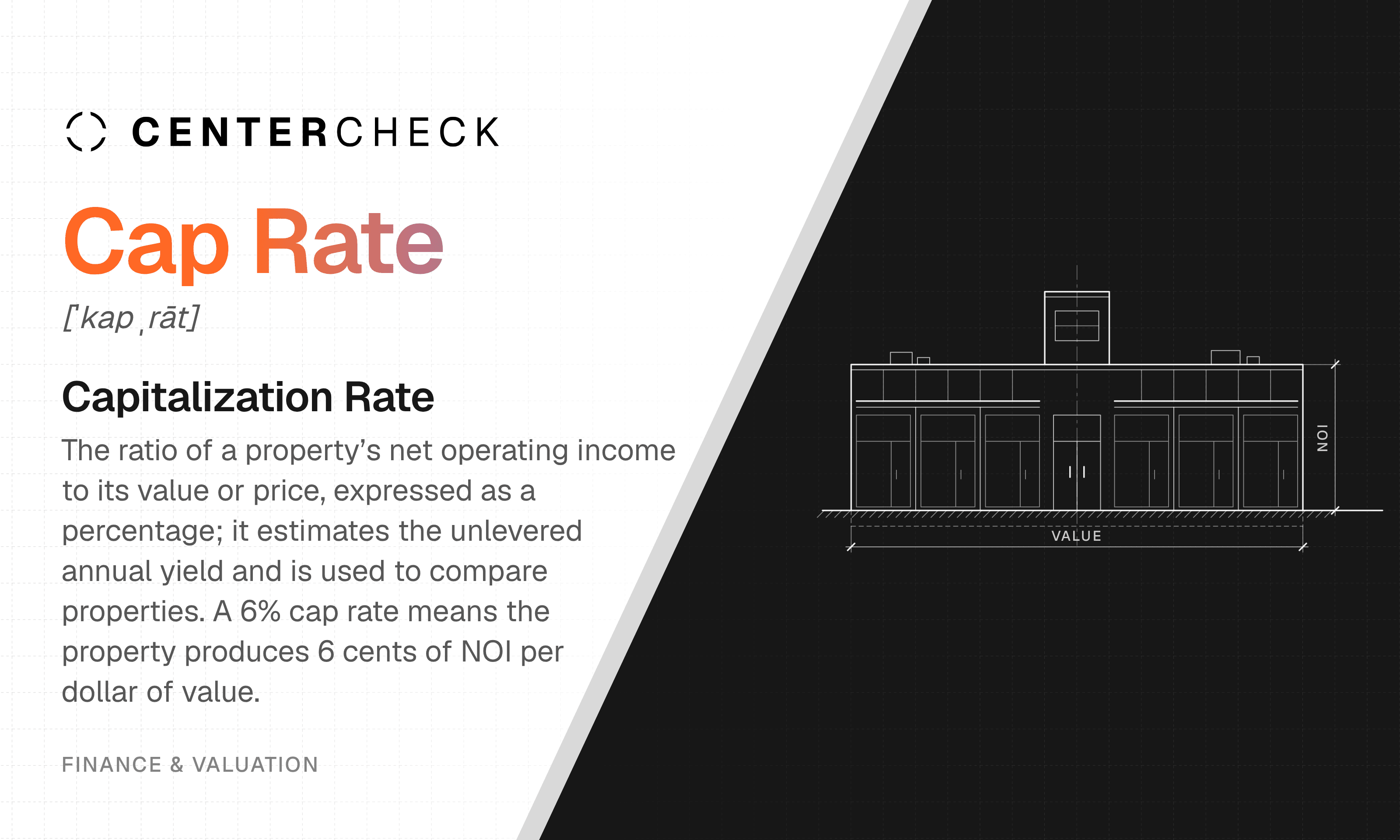
What Is a Cap Rate? Formula and Example
Cap rate is NOI divided by value. See the formula, a shopping center example and 2026 retail cap rate ranges.
Definition
A capitalization rate is a property's net operating income divided by its price or value. It states the unlevered annual yield and is the fastest way to compare how income properties are priced. A 6% cap rate means six cents of NOI for every dollar of value.
Formula
Cap rate = NOI ÷ value. Rearranged, value = NOI ÷ cap rate, which is how most income property is priced.
Example
A 100,000 square foot neighborhood center earns $1,620,000 of NOI and sells for $20,500,000: a 7.90% cap rate. If comparable centers trade at 7.50%, the implied value is $21,600,000. Forty basis points are worth $1.1 million.
In practice
Brokers price listings with it. Appraisers use it in the income approach. Lenders apply it to NOI to set the value behind loan-to-value. Grocery-anchored centers averaged 6.7% at the end of 2025 (JLL); multi-tenant retail averaged 7.0% to 7.3% in early 2026 (Northmarq, Marcus & Millichap).
Watch for
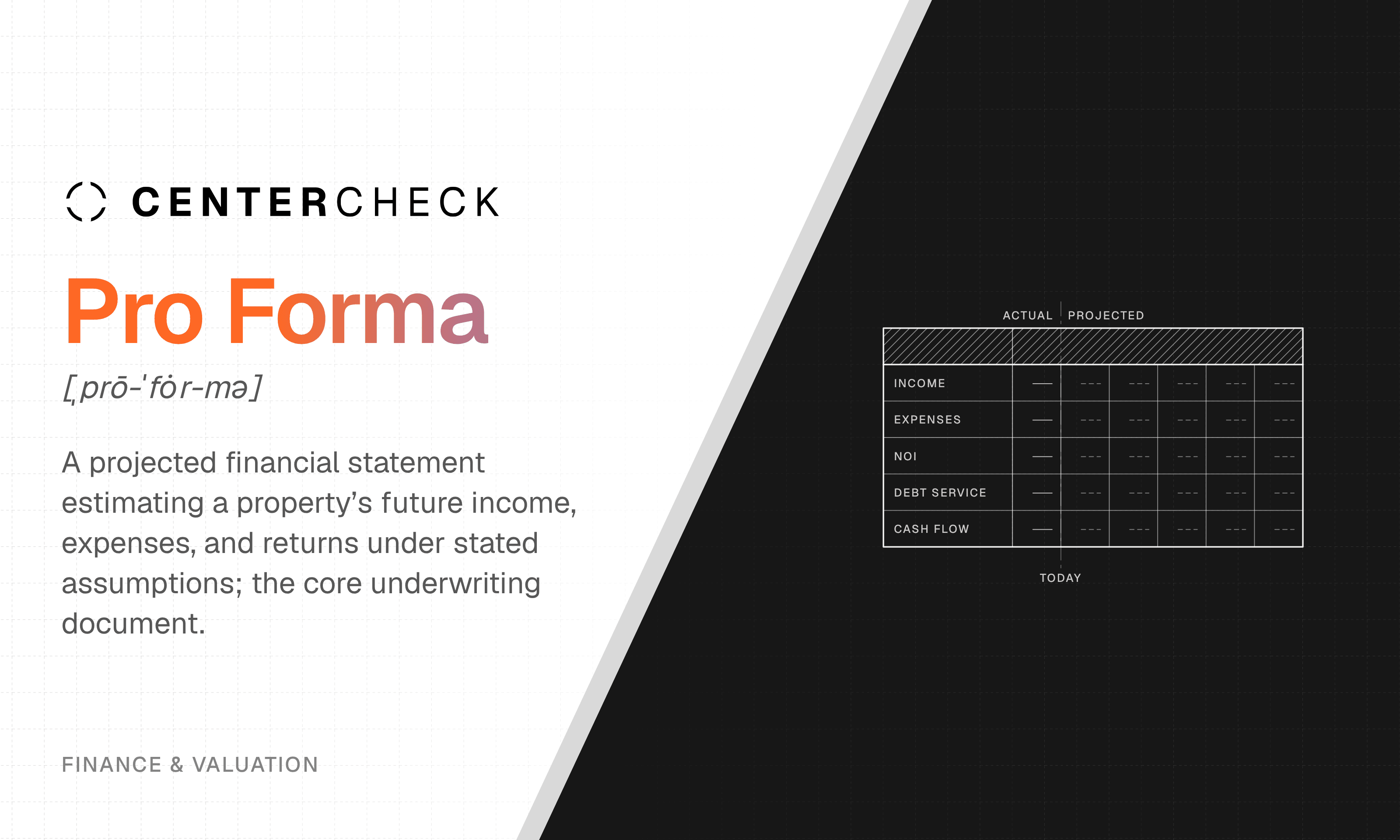
The rate is only as sound as the NOI beneath it. Sellers quote pro forma income; buyers should rebuild it from the rent roll. In retail that means checking whether tenants' sales support their rent. Tenant sales data, including CenterCheck's store level sales estimates, makes shopping center valuation data testable instead of taken on faith.
Related terms
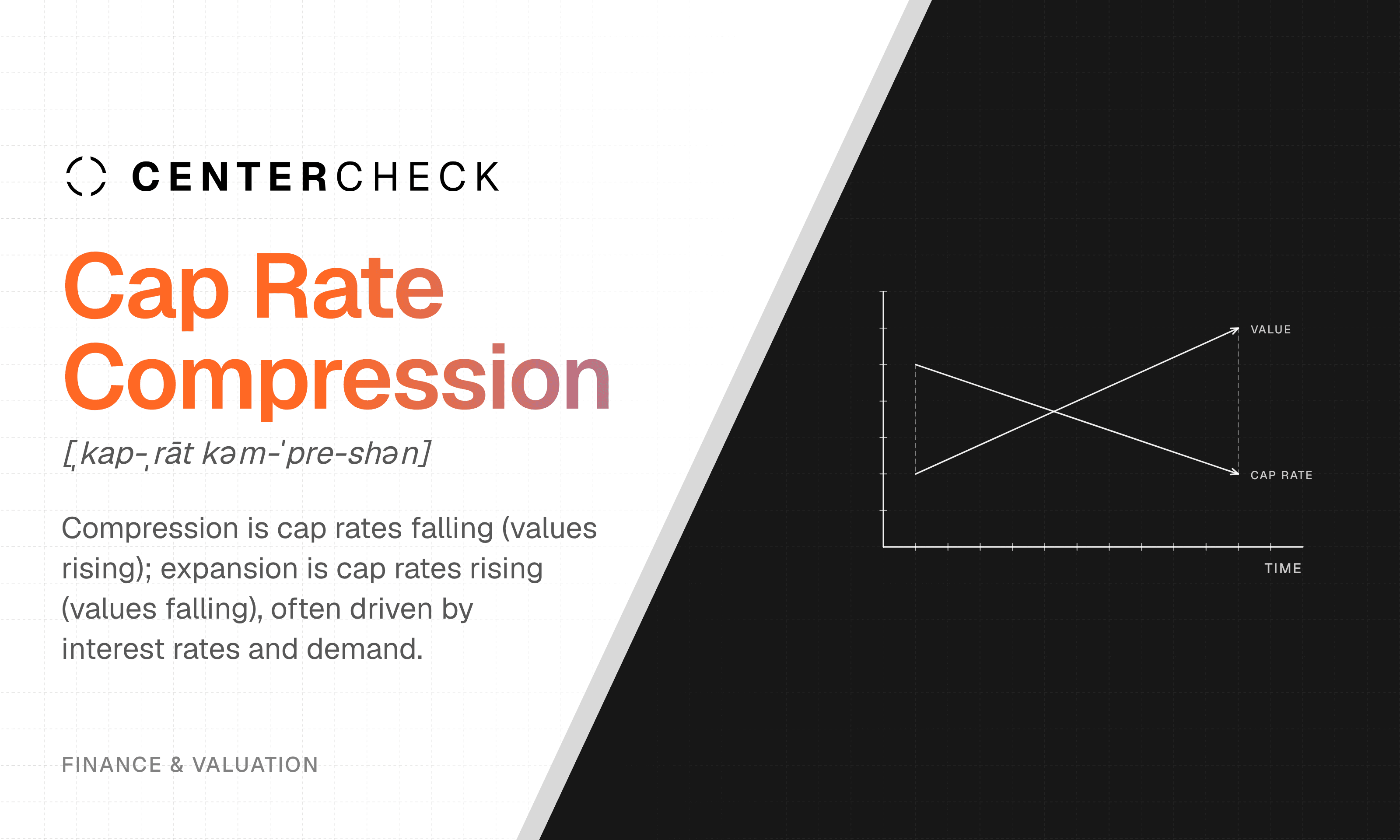
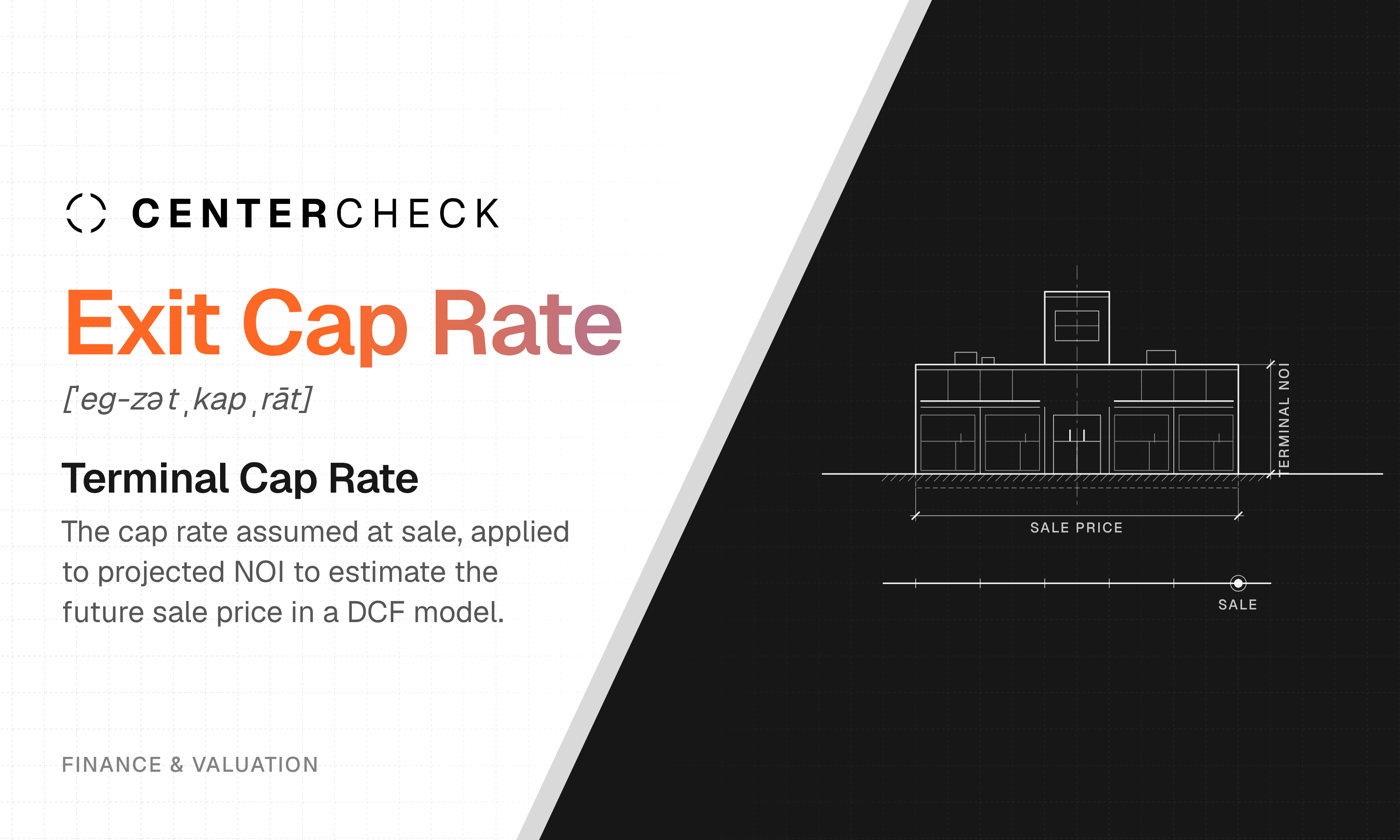
NOI · Going-In Cap Rate · Exit Cap Rate · Cap Rate Compression

Follow Us