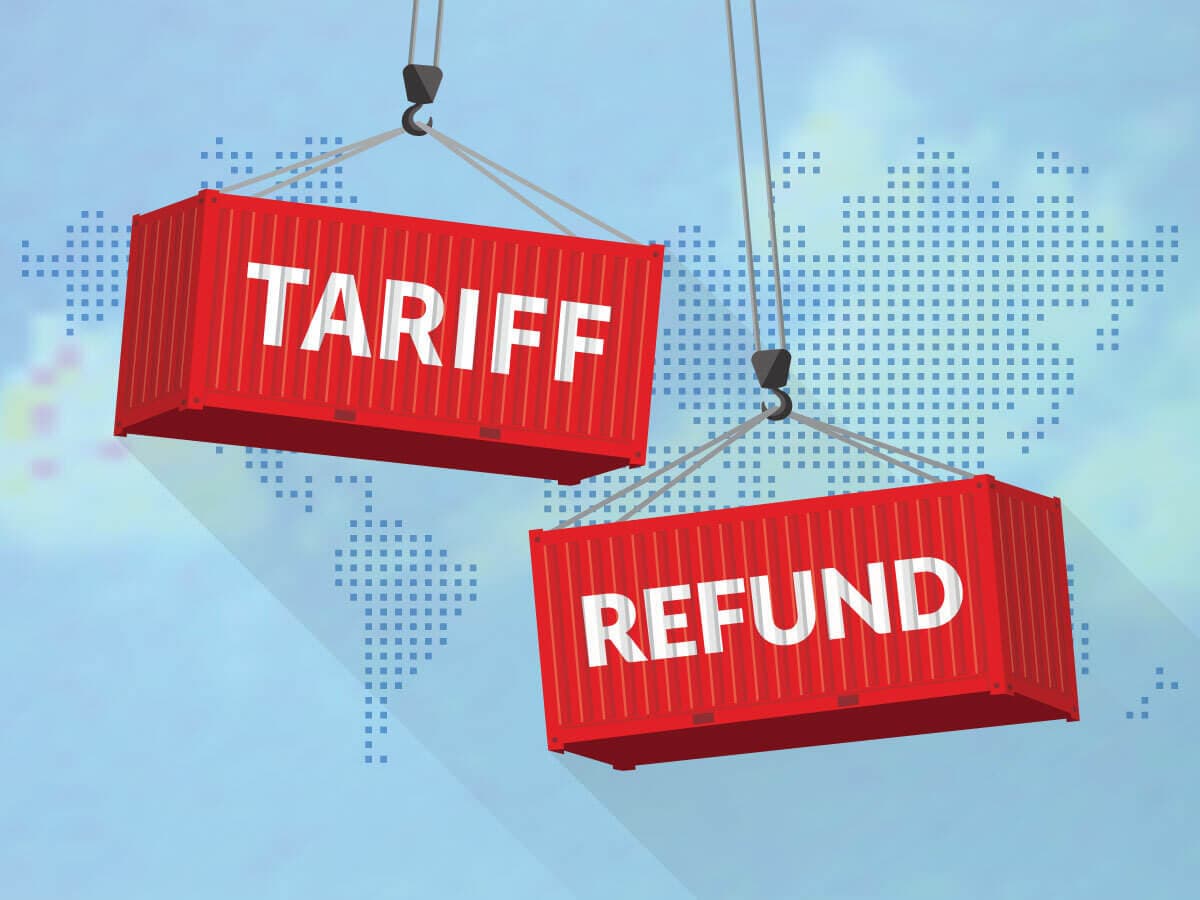
These Retailers Have Pledged to Refund Customer's Tarif Fees
Should you be expecting compensation?
Following the landmark Supreme Court decision invalidating the administration's aggressive 2025 import tariffs, the American retail sector is bracing for an unprecedented financial and logistical unwinding. What was initially celebrated by the markets as a victory for free trade has rapidly devolved into an accounting nightmare. Major retailers are now legally obligated to refund an estimated $14.5 billion in collected "tariff surcharges" directly to consumers, triggering a massive reallocation of capital and a wave of downward revisions for Q1 2026 earnings.
The ruling abruptly dismantles the pricing architecture that retailers spent the last eighteen months building. When the tariffs were enacted, virtually every major consumer discretionary operator—from consumer electronics giants to fast-fashion conglomerates—instituted transparent point-of-sale surcharges to protect operating margins. Now, the reversal of those duties requires a retroactive capital distribution of historic proportions, transforming a supply chain victory into a balance sheet liability.
- FedEx — Pledged to refund customers Stance: Will return any tariff refund it receives to shippers and consumers who originally paid tariff-related fees. Summary: Publicly committed to passing refunds through if and when it actually gets them back.
- Cards Against Humanity — Pledged to refund customers Stance: Commits to passing any tariff reimbursement back to its buyers. Summary: Says it will give refunds directly rather than waiting for government process.
- Dame Products — Pledged to refund customers Stance: Will automatically refund customers affected by tariff costs. Summary: Has stated it won’t wait for government reimbursement to issue refunds.
- Costco — Seeking refunds for itself (no consumer pledge yet) Stance: Filed suit to secure tariff refund rights. Summary: A major importer fighting to recover tariffs it paid — has not publicly said it will refund customers directly.
- Revlon — Seeking refunds for itself (no consumer pledge yet) Stance: Part of corporate suits to recoup tariff costs. Summary: Preserving refund rights in trade court; hasn’t indicated it’ll pass refunds to end buyers.
- Bausch + Lomb — Seeking refunds for itself (no consumer pledge yet) Stance: Joined other companies filing for tariff refund rights. Summary: Protecting long-term refund rights; no consumer refund statement yet.
- L’Oréal — Seeking refunds for itself (no consumer pledge yet) Stance: Part of a group of importers seeking reimbursement. Summary: Likely to pursue refund through courts; consumer pledge not reported.
- Dyson — Seeking refunds for itself (no consumer pledge yet) Stance: Filed suit along with others to preserve tariff refund claims. Summary: No public commitment to issue customer refunds.
- Bumble Bee Foods — Seeking refunds for itself (no consumer pledge yet) Stance: Filed for import tariff refunds. Summary: Acts to secure corporate refund rights; no public pledge to customers.
- EssilorLuxottica / Ray-Ban — Facing refund pressure Stance: Named in consumer lawsuits seeking share of tariff refunds. Summary: Has not publicly pledged to return any tariff-related overcharges; under pressure from consumer suits.
The Working Capital Shock
The immediate challenge facing the retail sector is liquidity. For the past four quarters, retailers have effectively operated as tax collectors, holding billions of dollars in tariff-related price increases. While some of these funds were remitted to the Treasury, a significant portion remained encumbered in escrow-like structures or was simply absorbed into general working capital pools while legal challenges wound their way through the appellate courts.
The Supreme Court’s mandate requires a rapid unwinding of these positions. Best Buy, which carries heavy exposure to tariff-sensitive Asian consumer electronics, disclosed in an 8-K filing this week that it expects to issue approximately $620 million in customer refunds over the next ninety days. Consequently, analysts at Goldman Sachs and Morgan Stanley have revised the retailer’s Q1 earnings per share estimates downward by an average of 14%, citing the severe impact on free cash flow and the administrative costs associated with processing millions of micro-transactions.
Similarly, Wayfair and Williams-Sonoma, both heavily reliant on imported furniture and textiles, have announced the establishment of dedicated cash reserves totaling $310 million and $450 million, respectively. The sudden requirement to liquidate these reserves is placing acute pressure on corporate treasuries, forcing some mid-cap retailers to tap into revolving credit facilities at elevated interest rates simply to process customer returns.
The Logistical Cost of Reverse Payments
Beyond the raw capital outflow, the operational friction of executing these refunds is driving severe margin compression. Refunding $14.5 billion is not a frictionless exercise. Financial institutions and payment processors do not process reverse transactions for free, and the software engineering required to identify, calculate, and distribute these funds is proving exorbitant.
Retailers with robust, closed-loop loyalty programs are uniquely positioned to mitigate this damage. Target Corporation and Amazon have signaled their intention to issue the majority of these refunds as digital store credit to Target Circle members and Amazon Prime accounts, respectively. This strategy effectively traps the refunded capital within their own ecosystems, preserving cash and guaranteeing future sales volume. Target executives estimate that retaining these funds within their digital wallet infrastructure will salvage approximately 400 basis points of operating margin that would otherwise be lost to credit card processing fees and administrative overhead.
Conversely, retailers reliant on guest checkouts and cash transactions face a logistical catastrophe. Specialty apparel retailers and discount department stores are struggling to locate millions of anonymous customers. Funds that cannot be returned to the original purchaser within a state-mandated timeframe will be subject to complex escheatment laws, forcing retailers to surrender the unclaimed cash to individual state governments. This administrative burden is projected to cost the industry an additional $850 million in compliance and legal fees alone.
The Unintended Macroeconomic Stimulus
While retail CFOs are currently navigating an accounting crisis, macroeconomic analysts are modeling an unexpected secondary effect: a sudden, targeted consumer stimulus.
The forced distribution of $14.5 billion back into the wallets of American shoppers arrives precisely as consumer discretionary spending was beginning to decelerate. Unlike a broad-based tax cut, this capital injection is highly concentrated among active retail consumers. Economic models from the Federal Reserve indicate that this sudden liquidity event could temporarily artificially inflate retail sales figures in Q2 and Q3 of 2026.
This creates a paradoxical environment for retail equities. While Q1 earnings reports will be marred by massive one-time accounting charges and margin contraction, forward guidance for the second half of 2026 may actually be revised upward. Consumers armed with unexpected refund checks are statistically highly likely to immediately redeploy that capital back into the retail sector.
The ultimate irony of the Supreme Court's decision is that the logistical nightmare currently depressing retail valuations may inadvertently fund the sector's next growth cycle. The retailers that can survive the immediate liquidity squeeze and efficiently process these refunds are poised to capture a massive wave of recycled consumer capital by the holiday season.

Follow Us
A&E’s $600M Loan Default Highlights Rent-Regulated CMBS Struggles
Spirit Halloween Is Acquiring Hot Topic. Here’s What Retail Owners Should Watch For
How Comic-Con 2026 Impacted Retail Sales in San Diego: 10 Findings for Retail Real Estate
What Makes a Good Retail Center? How Midtown Crossing’s Co-Tenants Create Connected Shopping Trips
Recent Blog Posts
Read the BlogA&E’s $600M Loan Default Highlights Rent-Regulated CMBS Struggles
10 min read
Spirit Halloween Is Acquiring Hot Topic. Here’s What Retail Owners Should Watch For
10 min read
How Comic-Con 2026 Impacted Retail Sales in San Diego: 10 Findings for Retail Real Estate
10 min read
What Makes a Good Retail Center? How Midtown Crossing’s Co-Tenants Create Connected Shopping Trips
10 min read