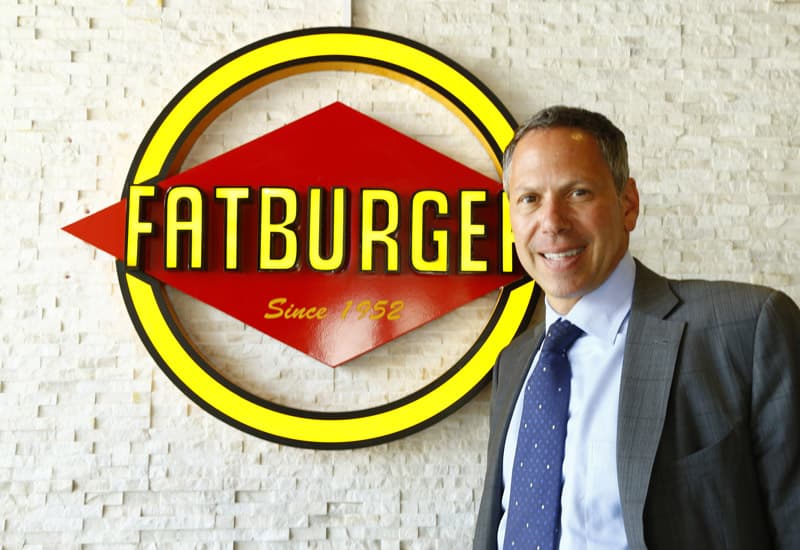
The Hamburglar: How FAT Brands Ate Itself Alive
The story of scandal, embezzlement, and self dealing
If you want to understand the spectacular, billion-dollar implosion of FAT Brands, do not look at the balance sheet first. Look at the driveway.
In May 2024, federal prosecutors alleged that Andrew Wiederhorn—the controlling shareholder and former CEO of the company that owns Fatburger, Johnny Rockets, and Twin Peaks—used corporate funds to put a $150,000 down payment on a Rolls-Royce Phantom.
That car is the perfect metaphor for the entire FAT Brands era: It is big, it is loud, it projects immense wealth, and it was allegedly paid for with money that didn’t actually belong to the guy driving it.
On January 26, 2026, the engine finally seized. FAT Brands filed for Chapter 11 bankruptcy in Texas, listing over $1.4 billion in debt and—in a detail that would be funny if it weren’t so tragic—just $2.1 million in cash. To put that in perspective, a company that owns 18 global restaurant chains and claims to be a titan of the industry had less cash on hand than the average high-volume Chick-fil-A franchise generates in a bad quarter.
How does a company with nearly $400 million in annual revenue end up with an empty bank account and a "For Sale" sign on the front lawn? The answer lies in a toxic cocktail of financial engineering, alleged corporate looting, and a business model that treated franchise royalties like a personal piggy bank.
The Origin Story: A Wolf in Chef’s Clothing
To understand the crash, you have to understand the pilot. Andrew Wiederhorn has always been a character cut from the B-roll of The Wolf of Wall Street. He didn’t come up flipping burgers; he came up flipping money.
In 2004, Wiederhorn pleaded guilty to filing a false tax return and paying an illegal gratuity, serving 15 months in federal prison. Most executives would let a prison stint be the quiet, shameful footnote of their career. Wiederhorn treated it like a prequel.
When he returned to the game, he didn't repent; he reloaded. He built FAT Brands on a financial structure known as Whole Business Securitization (WBS). In plain English, WBS is like taking a payday loan out on your entire life. FAT Brands pledged virtually every future dime it would ever make—royalties, licensing fees, intellectual property—to bondholders in exchange for massive upfront cash.
The plan was simple: Use that cash to buy more brands. Buy Johnny Rockets. Buy Round Table Pizza. Buy Fazoli’s. It was the "Pac-Man" strategy of retail holding companies. If you keep eating, maybe you never have to stop moving. By 2024, the portfolio looked like a graveyard of 1990s food court staples, all stitched together into a Frankenstein’s monster of debt.
But WBS has a fatal flaw. It strips the operating companies of cash. The royalties from that Fatburger in Phoenix don't go to the corporate HQ to pay for marketing or renovations; they bypass the company entirely and go straight to the bondholders. In court filings, Chief Restructuring Officer John DiDonato put it bluntly: The structure was "starving the business."
The Magic Trick: The "Shareholder Loan" Loop
While the business was starving, the boss was allegedly feasting.
The indictment dropped by the DOJ and SEC in 2024 reads less like a financial document and more like a Real Housewives expense report. Prosecutors alleged that Wiederhorn diverted approximately $27 million of the company’s cash for his personal benefit. At one point, this diversion represented nearly 40% of the company's total revenue.
The mechanism was audaciously simple. Wiederhorn would allegedly take millions out of the company and classify it as a "shareholder loan." Then, the company would just... forgive the loan. It was a magic trick where corporate treasury funds turned into private luxury goods, and the accountants were told to applaud.
The government’s itemized list of receipts is breathtaking. Beyond the Rolls-Royce, there was:
- $183,500 spent on jewelry (because nothing says "casual dining" like diamonds).
- First-class flights and luxury vacations for the family.
- And in a move that belongs in the Hall of Fame of Chutzpah, he allegedly used over $100,000 of company money to pay his divorce attorney.
Think about that for a second. If you are a landlord leasing space to a Johnny Rockets, you are fighting for rent checks while the CEO is allegedly using the tenant allowance to pay for his breakup.
The "Retention Bonus" Heist
If the indictment was the main course, the weeks leading up to the bankruptcy filing were the dessert.
According to SEC filings, on January 2, 2026—just 24 days before the company collapsed into bankruptcy court—FAT Brands paid out massive "retention bonuses" to its top executives.
Who were the lucky recipients?
- Ken Kuick, the CFO, received $500,000.
- Thayer Wiederhorn, the COO (and Andrew’s son), received $550,000.
- Taylor Wiederhorn, the Chief Development Officer (also Andrew’s son), received $550,000.
Let that sink in. The company had $2.1 million in the bank when it filed. Just three weeks prior, they took $1.6 million of their dwindling cash pile and handed it to the CFO and the founder's sons. It’s the corporate equivalent of looting the silverware while the Titanic is listing 45 degrees to starboard.
The Crash: When the Music Stopped
By late 2025, the interest rates on that $1.4 billion debt pile had ballooned, and the "Pac-Man" strategy hit a wall. You can’t buy your way out of trouble when nobody will lend you money.
In Q3 2025, the cracks turned into canyons. System-wide same-store sales dropped 3.5%. The company posted a net loss of $58.2 million in just three months. They started closing stores—14 Smokey Bones locations went dark almost overnight, leaving landlords with empty shells and "Temporarily Closed" signs taped to the glass.
When they finally filed for Chapter 11 in January 2026, the shelves were bare. The filing in the Southern District of Texas revealed a company that was effectively running on fumes. They didn’t even have enough cash to fund the bankruptcy process itself without begging the bondholders for permission to use the collateral.
Wiederhorn, for his part, remained defiant to the end. In a statement that requires a truly galaxy-brained level of optimism, he called the bankruptcy a "proactive step" and insisted the brands were "resilient." It’s the corporate equivalent of crashing your car into a telephone pole and telling the police you were just parking aggressively.
The Aftermath: Sweeping Up the Sesame Seeds
So where does this leave the industry?
For landlords, it is a nightmare scenario. Because the debt is "non-recourse" and held at the brand level, the bankruptcy could fracture the portfolio. We might see a world where Twin Peaks (which is actually profitable) gets sold off to a private equity firm, while the zombie brands like Fazoli’s are left to rot in a liquidation trust.
The lease rejections have already started. If you have a FAT Brands tenant in your center with negative EBITDA, don’t expect a rent check next month. Expect a rejection notice.
The saga of FAT Brands is a reminder that in the world of retail real estate, "creditworthiness" is a moving target. You can look at a tenant’s balance sheet and see billions in revenue, but if that revenue is securitized to the hilt and the CEO is treating the treasury like a personal ATM, that tenant is just a bankruptcy waiting to happen.
The King of the Food Court is dead. He didn't die from the competition. He choked on his own appetite.

Follow Us
A&E’s $600M Loan Default Highlights Rent-Regulated CMBS Struggles
Spirit Halloween Is Acquiring Hot Topic. Here’s What Retail Owners Should Watch For
How Comic-Con 2026 Impacted Retail Sales in San Diego: 10 Findings for Retail Real Estate
What Makes a Good Retail Center? How Midtown Crossing’s Co-Tenants Create Connected Shopping Trips
Recent Blog Posts
Read the BlogA&E’s $600M Loan Default Highlights Rent-Regulated CMBS Struggles
10 min read
Spirit Halloween Is Acquiring Hot Topic. Here’s What Retail Owners Should Watch For
10 min read
How Comic-Con 2026 Impacted Retail Sales in San Diego: 10 Findings for Retail Real Estate
10 min read
What Makes a Good Retail Center? How Midtown Crossing’s Co-Tenants Create Connected Shopping Trips
10 min read