The Flooring Category Killer
The Flooring Category Killer
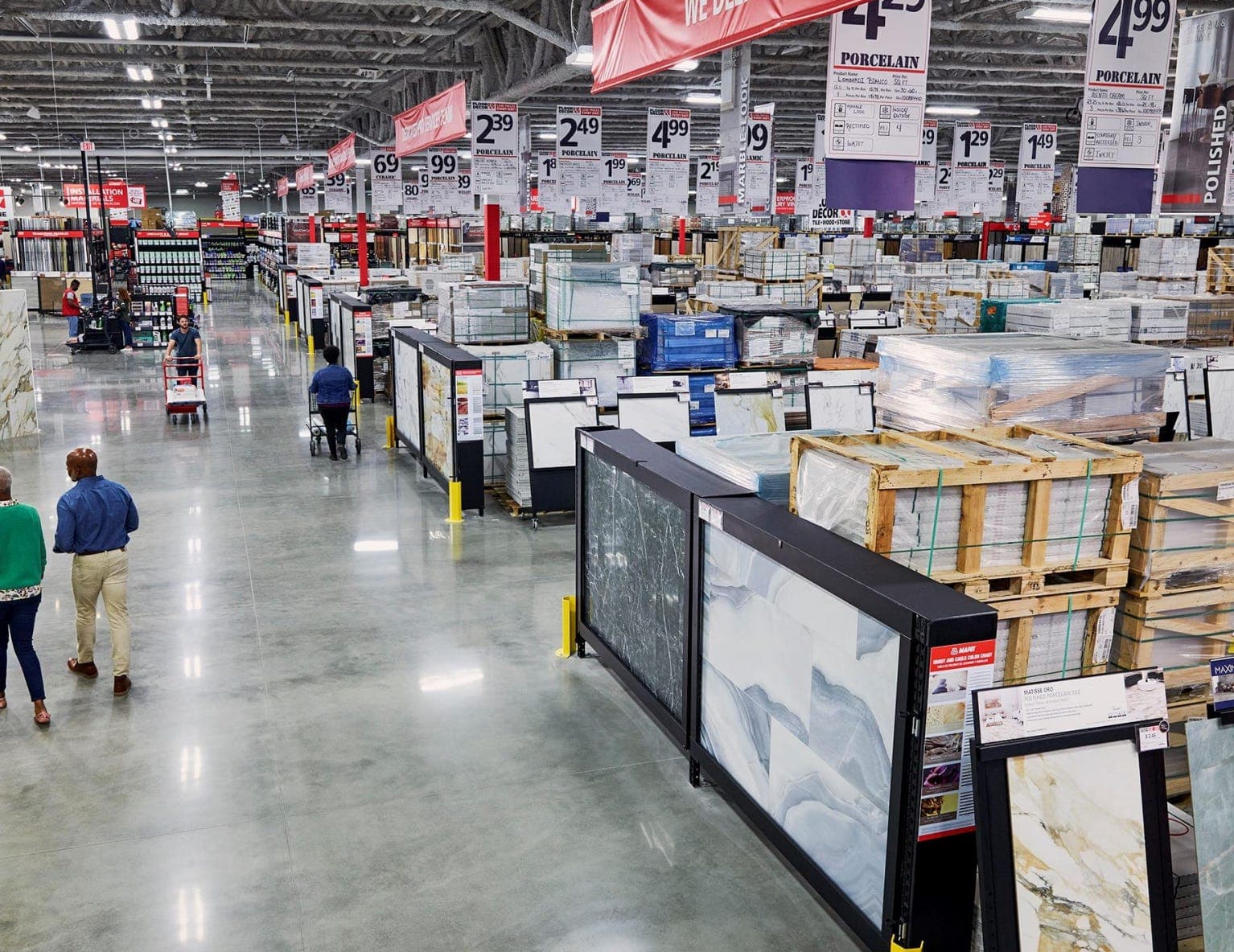
Walk into a Floor & Decor that’s humming on a Saturday and you feel it immediately: contractors loading carts, homeowners debating tile patterns, forklifts running full-time. Walk into a weaker location and the contrast is just as obvious.
Same brand. Same format. Same SKU density. And yet the performance gap can be brutal.
Floor & Decor’s success looks simple from the outside — open huge boxes near highways and grow like a category killer should. But that’s not the real story. The real story is that some neighborhoods behave like perfect Floor & Decor markets, and some don’t. The company’s best locations line up almost perfectly with the way people in those areas actually spend on home improvement.
That’s where data tells the truth.
Why Floor & Decor’s Best Stores Hit Hard
The top-performing stores tend to land in markets with a specific set of behaviors:
1. Heavy home-improvement spend concentrated in a tight radius Not just high-income households — households that actually pour money into flooring, kitchen refreshes, and big-ticket DIY projects.
2. A massive base of repeat professional buyers The pros who visit weekly for jobs drive a disproportionate share of the store’s economics. Strong markets show unusually high transaction frequency from contractor segments before a location even opens.
3. Adjacent retail that signals renovation activity Think appliance stores, cabinet shops, home décor, or high-velocity Home Depots. When these categories over-index, Floor & Decor tends to crush.
4. High spillover from “trigger events” Areas with strong home turnover, new construction, or large-format rental housing put more people into renovation cycles. Those customers fuel Floor & Decor’s early ramp.
All of this shows up in third-party credit and debit card data long before a lease is signed.
Why Weaker Stores Struggle
The underperformers usually share different signals:
1. Home-improvement spend looks strong on paper but isn’t concentrated Plenty of income, but the dollars scatter across categories — dining, apparel, experiences. Renovation spend turns out to be thinner than expected.
2. Contractor repeat behavior is weak Pros exist, but they aren’t loyal in that zip cluster. They drive 20 minutes elsewhere because their routines are already cemented.
3. The market buys small-ticket DIY, not full-room remodels Debit card data catches this instantly: baskets skew low, meaning price-sensitive households that don’t drive Floor & Decor’s economics.
4. The nearby retail mix doesn’t correlate with trades activity If the “home upgrade ecosystem” isn’t present, the store ends up swimming against the tide.
A bad location doesn’t reveal itself slowly. The warning signs were always in the data.
How Data Gives F&D an Edge in Picking Winners
Floor & Decor already plays a smarter game than most big-box operators. But the next leg of expansion — past 200 stores and well into smaller markets — depends on precision.
This is what modern card-level spend data makes possible:
• Identify neighborhoods where renovation dollars are unusually dense. Not households. Not rooftops. Dollars.
• Map contractor shopping routines before entering the market. You can see exactly where the pros drive, how often they buy, and what categories they over-index in.
• Spot hidden pockets where customers already behave like top-performing F&D markets. Sometimes the best future stores are in areas the demographics would never flag.
• Avoid markets where high income disguises low renovation intent. This single mistake has sunk more than one big-box rollout.
• See competitive pressure clearly. If Home Depot and Lowe’s in the trade area show low pro frequency, that's a red flag for everyone.
Picking the right real estate starts looking less like scouting and more like forensic spending analysis.
What This Means for Floor & Decor as It Expands
F&D’s runway is still long. But the brand is reaching the point where the next 50 stores will separate the exceptional scalers from the ones that stalled out.
The company can now:
- Choose markets where big-basket remodel spend is real
- Understand which neighborhoods quietly generate contractor trips all year
- Filter for geographies that mirror the behavioral profile of the chain’s top quartile stores
- Build a more predictable ramp curve for new openings
Floor & Decor isn’t just a category killer because its stores are big and well-priced. It’s a category killer because, when it chooses right, the underlying customer behavior lines up perfectly with its model.
And behavior is predictable — if you have the data.
The Bottom Line
Some Floor & Decor stores become monsters. Others never find their rhythm. The gap isn’t luck. It’s spending behavior, contractor patterns, and renovation intensity.
With the right data, you can see the winners before the first pallet is unloaded.

Follow Us
A&E’s $600M Loan Default Highlights Rent-Regulated CMBS Struggles

Spirit Halloween Is Acquiring Hot Topic. Here’s What Retail Owners Should Watch For

How Comic-Con 2026 Impacted Retail Sales in San Diego: 10 Findings for Retail Real Estate

What Makes a Good Retail Center? How Midtown Crossing’s Co-Tenants Create Connected Shopping Trips
Recent Blog Posts
Read the BlogA&E’s $600M Loan Default Highlights Rent-Regulated CMBS Struggles
10 min read
Spirit Halloween Is Acquiring Hot Topic. Here’s What Retail Owners Should Watch For
10 min read
How Comic-Con 2026 Impacted Retail Sales in San Diego: 10 Findings for Retail Real Estate
10 min read
What Makes a Good Retail Center? How Midtown Crossing’s Co-Tenants Create Connected Shopping Trips
10 min read