Mixed Signals from Black Friday and Cyber Monday Shopping
Mixed Signals from Black Friday and Cyber Monday Shopping
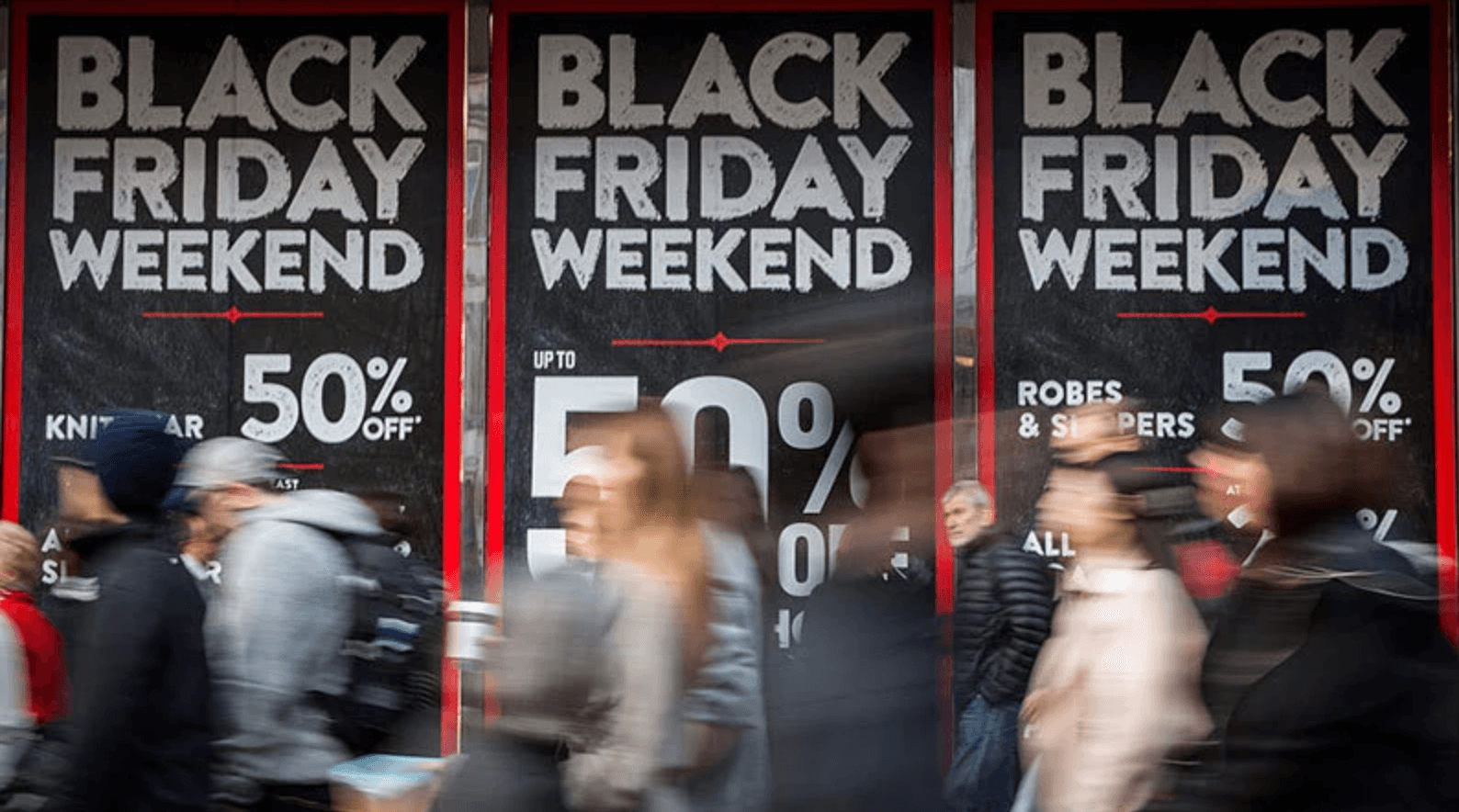
Holiday shopping this past week delivered a mixed signal for retailers. On one hand, online sales and price levels reached new highs; on the other, order volumes lagged, and foot traffic at physical stores posted declines. The boost in holiday sales appears driven more by inflation and tighter promotional discipline than by a surge in consumer demand. Meanwhile, anecdotal economic data suggests lower- and middle-income households pulled back on discretionary spending, while affluent consumers continued buying, signaling a continuation of the K-shaped economy. For brands and landlords, this underscores a divide with success being increasingly tied to precise customer targeting, value perception, and online channel investments.
Holiday Shopping Highlights
- On Black Friday, Salesforce reports U.S. online order volume fell ~1% year-over-year, while average selling prices rose ~7%.
- Despite fewer orders per capita, total online revenue climbed thanks to higher ticket prices and weaker discounting — a sign retailers leaned more on pricing than volume to deliver topline gains.
- According to coverage in Forbes, physical store traffic during Black Friday declined ~3% year-over-year — indicating fewer in-person purchases this holiday.
- That decline likely reflects a broader shift toward online buying, though some weather-related disruptions (e.g., a winter storm during the Black Friday weekend) may have suppressed in-person traffic disproportionately in some markets.
Weaker Underlying Consumer Demand
- The Federal Reserve’s November 2025 Beige Book cites a drop in consumer spending, especially among lower- and middle-income households, as price sensitivity increases and economic uncertainty mounts.
- Many small- and mid-sized retailers and service providers reported softer demand. In contrast, high-end retailers and luxury-category sellers appeared more insulated.
Winner & Loser Retailers
- Some large-format and discount-oriented chains — particularly those perceived as value providers — posted relatively strong results this quarter. Walmart reported they are gaining share in this environment as consumers trade down, with more higher income shoppers going to the retailer over higher priced destinations.
- Meanwhile, retailers dependent on middle-income discretionary spend or gift-driven buying appear to have struggled, as consumers delayed or pared back non-essential purchases. Target specifically has reported weakness in their customer base.
What Retailers, Landlords, and Investors Should Watch
- Promotional strategy vs. price discipline: Retailers who repeat aggressive discounting risk eroding margins; those who hold pricing may suffer volume declines. The 2025 holiday season showed the trade-off.
- Foot traffic doesn’t guarantee conversions anymore. Even if mall or store visits rebound, retailers must ensure compelling value or exclusivity to convert visits into sales.
- Location and format segmentation matters more than ever. Discount and value-oriented formats, outlet centers, and value-driven suburban locations are more likely to succeed than high-end lifestyle malls dependent on middle-income discretionary spend.
- Credit-spending trends signal deeper economic shifts. As the Beige Book suggests, consumer caution may translate into pressure on apparel, gifts, and non-essentials going into 2026. Retailers and owners should factor in uneven foot traffic and lower discretionary budgets when planning new leases or renewals.
Conclusion: Performance Looks Strong, But There's Tension Below the Surface
Holiday 2025 wasn’t a banner year because of buying fervor. It was a strong year because of higher prices, tighter promotions, and a consumer base that’s splitting into distinct segments.
For brands and landlords who read the data carefully, there are wins to be had — especially in value formats, essentials, and discount retail. But for those depending on broad-based, middle-income discretionary spending, the path forward may be bumpy.
As we head into 2026, success will go to those who understand where demand is growing, who navigate value sensitivity, and who adapt their real-estate and merchandising strategy accordingly.

Follow Us
A&E’s $600M Loan Default Highlights Rent-Regulated CMBS Struggles

Spirit Halloween Is Acquiring Hot Topic. Here’s What Retail Owners Should Watch For
How Comic-Con 2026 Impacted Retail Sales in San Diego: 10 Findings for Retail Real Estate

What Makes a Good Retail Center? How Midtown Crossing’s Co-Tenants Create Connected Shopping Trips

Recent Blog Posts
Read the BlogA&E’s $600M Loan Default Highlights Rent-Regulated CMBS Struggles
10 min read
Spirit Halloween Is Acquiring Hot Topic. Here’s What Retail Owners Should Watch For
10 min read
How Comic-Con 2026 Impacted Retail Sales in San Diego: 10 Findings for Retail Real Estate
10 min read
What Makes a Good Retail Center? How Midtown Crossing’s Co-Tenants Create Connected Shopping Trips
10 min read