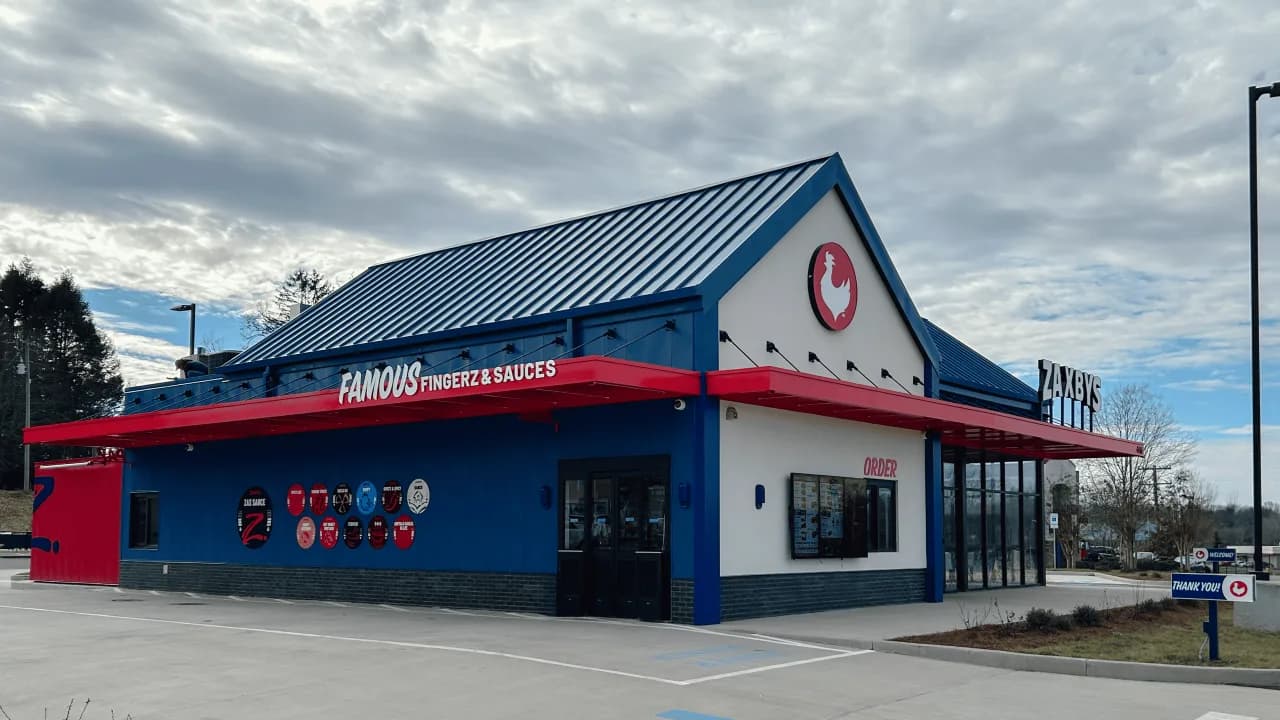
Zaxbys Surpasses 1,000-Unit Milestone as It Accelerates National Expansion Strategy
It's grow to win!
Zaxbys, the Atlanta-based fast-casual chicken operator, has officially surpassed the 1,000-restaurant milestone, a significant indicator of the brand's maturation from a regional stronghold to a national competitor. Entering its 36th year of operations, the company reported that its fiscal year 2025 performance exceeded internal growth expectations, providing the capital and operational momentum necessary to support an aggressive expansion roadmap for 2026 and beyond.
The brand, which currently operates across 22 states, is undergoing a strategic geographic diversification. While historically concentrated in the Southeast, Zaxbys recently executed market entries in Las Vegas and Phoenix, signaling a definitive push into the Western United States. Concurrently, the company is densifying its footprint in the Midwest and Mid-Atlantic regions, aiming to capture market share in high-density corridors where chicken consumption trends remain robust.
2026 Expansion Targets and Long-Term Guidance
Management has issued guidance targeting more than 60 new restaurant openings in fiscal year 2026. This acceleration is part of a broader, long-term strategic objective to reach a run-rate of 100 new store openings annually.
This ramp-up in development velocity is underpinned by a diversification of the company’s real estate portfolio. Moving away from a monolithic reliance on traditional dine-in boxes, Zaxbys is increasingly leveraging flexible asset formats to penetrate high-barrier markets. The 2026 pipeline is supported by a mix of traditional units, drive-thru-only models—which optimize throughput and reduce land requirements—and non-traditional locations situated on college campuses and military bases.
Asset Flexibility Driving Return on Invested Capital
The shift toward varied prototypes represents a sophisticated response to escalating construction costs and shifting consumer behavior. By decoupling growth from large-format dining rooms, Zaxbys can lower its initial investment per unit while maintaining, or potentially enhancing, sales volume through higher drive-thru efficiency.
The integration of non-traditional sites further creates a captive audience revenue stream that offers insulation against broader economic volatility. As the quick-service restaurant (QSR) sector faces headwinds related to labor costs and commodity inflation, Zaxbys' pivot toward asset flexibility suggests a focus on unit-level economics and Return on Invested Capital (ROIC) as the primary drivers of its next phase of growth.

Follow Us
A&E’s $600M Loan Default Highlights Rent-Regulated CMBS Struggles

Spirit Halloween Is Acquiring Hot Topic. Here’s What Retail Owners Should Watch For
How Comic-Con 2026 Impacted Retail Sales in San Diego: 10 Findings for Retail Real Estate

What Makes a Good Retail Center? How Midtown Crossing’s Co-Tenants Create Connected Shopping Trips
Recent Blog Posts
Read the BlogA&E’s $600M Loan Default Highlights Rent-Regulated CMBS Struggles
10 min read
Spirit Halloween Is Acquiring Hot Topic. Here’s What Retail Owners Should Watch For
10 min read
How Comic-Con 2026 Impacted Retail Sales in San Diego: 10 Findings for Retail Real Estate
10 min read
What Makes a Good Retail Center? How Midtown Crossing’s Co-Tenants Create Connected Shopping Trips
10 min read