Sprouts Farmers Market Enters New York: A Strategic Bet on the I-95 Corridor and Smaller Footprints
Ask a New Yorker if they shop at Sprouts, and they’ll have no clue what you’re talking about.
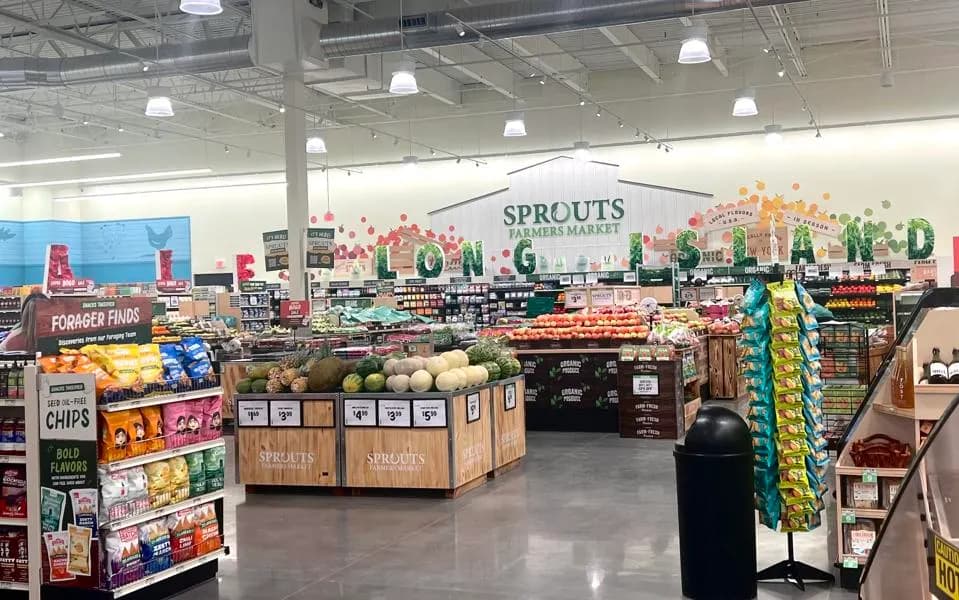
Sprouts Farmers Market has officially commenced its penetration of the New York market, opening its first location in Centereach, Long Island, today. The move marks a significant strategic pivot for the Phoenix-based natural grocer as it seeks to diversify its geographic concentration beyond its traditional strongholds in California, Texas, and Florida.
The Centereach opening is the beachhead for a broader aggressive expansion plan along the I-95 corridor. Management has outlined a target of 10% year-over-year unit growth, with expectations to open dozens of additional locations by the end of 2026. This trajectory places the company on course to surpass the 500-store milestone nationwide in the near term, with confirmed future sites in Smithtown and Levittown on Long Island, as well as Hartsdale in Westchester County. Further expansion into Maryland and Massachusetts is slated for 2028.
The operational narrative of this expansion is defined by a disciplined adherence to a smaller, more efficient footprint. The new New York locations average approximately 25,000 square feet, a reduction from the retailer's earlier vintage stores.
This condensed format is designed to optimize revenue per square foot while differentiating the shopper experience from traditional supermarkets. The layout centralizes produce—the highest-velocity category—in the middle of the store with lower aisle profiles to increase sightlines. By eliminating service-heavy departments such as full-service butcher and seafood counters in favor of pre-packaged proteins and a deli, Sprouts is effectively reducing labor overhead while maintaining its "fresh" positioning.
Sprouts continues to leverage its "treasure hunt" merchandising strategy to drive basket size and frequency. A key component of this is the "Forager Finds" program, a dedicated section for emerging brands. The program operates as a 90-day trial period for startups, serving as a data-driven funnel for permanent inventory. According to company data, approximately 40% of these provisional products graduate to permanent shelf placement, allowing Sprouts to identify trends before larger competitors.
Furthermore, the company is aggressively expanding its private label offerings, which now account for approximately one-third of total product SKUs. This vertical integration allows for tighter margin control and adherence to strict quality standards, including prohibitions on artificial dyes and antibiotics in meat. The focus on specific dietary demographics—grass-fed, organic, and seed-oil-free—positions the retailer to capture market share from both conventional grocers and higher-end competitors like Whole Foods Market.
The entry into the dense, high-cost New York real estate market represents a test of the Sprouts model's portability. While the brand has established dominance in the Sunbelt, the Northeast presents a different competitive landscape dominated by entrenched regional players and high operating costs. However, by targeting the "health-conscious value" demographic and utilizing a smaller, more agile real estate strategy, Sprouts is betting that its differentiated operating model can permeate the region effectively.

Follow Us
A&E’s $600M Loan Default Highlights Rent-Regulated CMBS Struggles

Spirit Halloween Is Acquiring Hot Topic. Here’s What Retail Owners Should Watch For

How Comic-Con 2026 Impacted Retail Sales in San Diego: 10 Findings for Retail Real Estate

What Makes a Good Retail Center? How Midtown Crossing’s Co-Tenants Create Connected Shopping Trips

Recent Blog Posts
Read the BlogA&E’s $600M Loan Default Highlights Rent-Regulated CMBS Struggles
10 min read
Spirit Halloween Is Acquiring Hot Topic. Here’s What Retail Owners Should Watch For
10 min read
How Comic-Con 2026 Impacted Retail Sales in San Diego: 10 Findings for Retail Real Estate
10 min read
What Makes a Good Retail Center? How Midtown Crossing’s Co-Tenants Create Connected Shopping Trips
10 min read